 |
1. Historic American Buildings Survey John O. Brostrup, Photographer April 21, 1936 11:15 A. M. VIEW FROM NORTHEAST (front)
|
Saturday, October 22, 2011
Slave Insurrection In Prince George's County Maryland December 1739


Saturday, October 08, 2011
Quartering - The Penalty for Slave Insurrection In Colonial Maryland
34. Any Negro, or other Slave, convict of Petit-Treason, Murder, or wilfully burning of Dwelling-houses, shall have Judgment to have the Right Hand cut off, to be hanged, quartered, and the Head and Quarters set up in the most public Places of the County.
1729, ch. 4, §. 1. [1]
[1] Bacon's Laws of Maryland. Maryland Archives. http://www.msa.md.gov/megafile/msa/speccol/sc2900/sc2908/000001/000075/pdf/am75--690.pdf
1729, ch. 4, §. 1. [1]
[1] Bacon's Laws of Maryland. Maryland Archives. http://www.msa.md.gov/megafile/msa/speccol/sc2900/sc2908/000001/000075/pdf/am75--690.pdf
A Proclamation On Slave Insurrection in Prince George's County, By His Excellency Samuel Ogle,Governor, Maryland
By His Excellency Samuel Ogle Esqr Governor and
Commander in Chief in and over the Province of Maryland

the following Commission being produced by the
Honble Col" Charles Hammond is ordered to be Entered [1}
[1] MSA SC M 3155, Page 1125 (spelling are true to manuscript) http://aomol.net/megafile/msa/speccol/sc4800/sc4872/003155/html/m3155-1125.html
Friday, October 07, 2011
The Current State of Congressional Redistricting
The current ten year redistrictingmap proposed for Maryland finds me at odds with myself. The proposed map as I
understand it does everything possible to distort any sense of local community.
The thin swirls of the proposed congressional districts look like a tort
created by master chefs. The elongated gyrations that reach across historic,
geographic and political boundaries have no bearing on the views and needs of
local communities other than political control of the elected few.
Who actually expects Donna Edwards
and the core of the 4th District to find common ground between her urban established
Washington DC suburban county needs and dreams with those of rural agrarian
southern Anne Arundel County with its historic eye towards the bay and
Baltimore. Of course there are some common goals but it is in the minutia of
needs that a Congressperson works, and this plan is a recipe for divided
loyalties, divided time and resulting critique of performance from all sides.
I would have expected that at the
very least, if the 4th was to lose Montgomery County that it would have picked
up the eastern wide of the Potomac River down in Southern Maryland. Of course I
am skirting the problem of Hoyer's 5th which hooks up into Prince George's
County along the western side of the Patuxent River. Many I assume would have
thought that the 4th should have included as much of Prince George's county as
possible thereby creating a compact cohesive unit.
And here is my conflicted state of
mind for as a grass root advocate for the people and programs of USDA ARS BARC
and NAL I am delighted to see Mr. Hoyer keep the federal faculties in his
district. As far as Prince George's County is concern BARC and NAL are on the
other side of the moon. There is no visible interest, no desire to support and
no recognition of the 300 million plus that these federal agencies pump into
the region which, in the case of BARC, has been provided at some level for over
100 years. When is the last time a County Executive visited the world's largest
research center? Not in the last 15 plus years; and so I succumb to narrow focused
parochial interest - support of world class research recognized around the
world everywhere except for right here in the county - the same kind of
interests which I think are in some
small part at the heart of the current, contorted congressional redistricting maps
of Maryland now before us.
Thursday, September 22, 2011
Some Roots of Today's Political Controversies in the US
The great political debate in US history was, and now is, framed by the fundamental disagreement between Hamilton and Jefferson. Jefferson was anti federal banking system, anti Washington, anti federal intrusion into education, anti "Wall Street" and for limited federal power and authority. Jeffersonian became the Democratic party under Andrew Jackson in response to the Federalist progressive Hamiltonian policies of J Q Adams, Webster, Clay and Calhoun (who later defects). JQ Adams proposed the American system of federal support for infrastructure to benefit American business and to create jobs through federally supported education. This became the Whig party in active opposition to the disastrous economic polices of Jackson's Anti banking, Jeffersonian Tea Party view (resulting in the Financial Panic of 1837). The Whigs attempted a progressive agenda side stepping the issue of slavery; the result was, when the Jeffersonian Jacksonian Democratic "Tea Party" forced the issue of no regulation of personal business decisions and federal regulation such as owning slaves, the Whig including Lincoln had to reform as a radical Progressive Party (GOP) to respond to the Tea Party led by Jefferson Davis and others who believed that community standards trump federal authority.
Wednesday, July 13, 2011
History of John H Bayne, Salubria, Horticulture and Slavery
Speaker Series
2011 Speaker Series – 7/27/11
July 27th 10:30 a.m.-12:00 p.m.
Live and Enjoy: How to Best Honor the Past and Plan for the Future: Seeking a Balanced Approach for the Salubria Plantation Site – 1.5 CM credits (pending)
Presentation Description:
What is best for the Salubria Plantation site? A landowner plans and community members ponder the future of a historic site that features prominently in the African-American history of Prince George's County. The rich history serves as a backdrop to a contemporary opportunity to enhance this community through collaborative land use planning. Pending future plans, can the historic significance be captured with a thoughtful, inclusive site design that highlights the colorful past and current natural environmental beauty of the site? An opportunity exists for a win-win-win for the community, the landowner, and the link to the past that this site clearly represents. This discussion will focus on why the historic Salubria Plantation is considered important to the community. The history represents a tragic juxtaposition of abundant wealth and prosperity on one hand and oppression and yearning for freedom on the other. The speakers will shed light on the process of historic preservation; the legacy of John H. Bayne, influential leader in the fields of medicine, politics, education, and agriculture; the five generations of his family who lived and prospered there; and what lessons we can learn from the past.
Presenters' Biographies:
Jennifer Stabler, Ph.D., Planner Coordinator, Historic Preservation Section, M-NCPPC. Dr. Stabler reviews subdivision plans submitted to the Prince George's County Planning Department to determine the necessity of archeological surveys. She reviews archeological reports to ensure compliance with county, state, and national guidelines and recommends treatment of significant archeological resources to the Prince George's County Planning Board. Dr. Stabler also reviews historic area work permits and makes recommendations to the Prince George's County Historic Preservation Commission on archeological matters. She served as the project leader in developing a cemetery preservation manual, an antebellum historic context, and a postbellum historic context for Prince George's County. Stabler has archeological survey and excavation experience in Maryland, Virginia, Delaware, Texas, Israel, and Italy. She assisted archeologists at Fort Hood, Texas, in evaluating the significance of more than 1,000 historic archeological sites for inclusion in the National Register of Historic Places. Dr. Stabler also excavated for 15 field seasons with the University of Maryland at Caesarea Maritima in Israel, a major Mediterranean port from the Roman through Crusader periods.
John Peter Thompson: Mr. Thompson works with public and private organizations providing historic frameworks and philosophical paradigms that enable researchers and policy mangers to creatively address complex environmental issues in the areas of invasion biology and sustainable agronomic best-management practices. He serves as a technical advisor for the national sustainable landscape standards project of the US Green Building Council and the LBJ Wild Flower Center, University of Texas, and currently serves as a national credit steward for the project with responsibility for invasive species and historic sites that are among several areas within the framework developed by SITES assigned to him. He is working with the Department of the Interior to develop urban invasive species management protocols. In addition, he is serving as a subject matter expert for Prince George's Community College to create a "green" workforce development program. He also is working with Cameroonian farmers on sustainable coffee and chocolate production in the northwest.
Moderator: Howard Berger: Trained as an architectural historian, Mr. Berger has conducted field survey and research projects at M-NCPPC that have culminated in both the listing of historic districts in the National Register of Historic Places (Mount Rainier, University Park) and designation of local historic districts (Old Town College Park, St. Thomas Episcopal Parish). He has also reviewed historic area work permit applications and preservation tax credit applications affecting historic sites, been responsible for development referrals affecting historic resources, and supervised contractors responsible for large-scale survey and documentation projects. He has participated in two Historic Sites and Districts Plan amendments (1992 and 2010), and is a graduate of Hamilton College (B.A. in Government) and has done graduate work in historic preservation at George Washington University's American Studies program. He is active in Washington, D.C., as president of the Sheridan-Kalorama Historical Association, Inc.; president of The Friends of Alice Pike Barney Studio House, Inc.; and as a long-time board member and volunteer for the D.C. Preservation League.
- Further Speaker Series information: http://www.pgplanning.orgTime: 10:30 a.m.-12:00 p.m. (See dates here.)
Location: County Administration Building, 1st Floor Council Hearing Room, 14741 Governor Oden Bowie Drive, Upper Marlboro, MD 20772
Contact:
o E. Fatimah Hasan, AICP, Planner Coordinator - Fatimah.Hasan@ppd.mncppc.org
o Ivy Thompson, Senior Planner and Co-Chair, Employee Development and Training CCI Goal Team –Ivy.Thompson@ppd.mncppc.org
http://www.pgplanning.org/Projects/Speaker_Series.htm
Sunday, June 05, 2011
The Columbia Air Center - One of the Many "Firsts" in Prince George's County, Maryland
 |
| picture from: pgparks.com |
"In 1941, aviation history was made when the first African American owned and operated airfield in the state of Maryland was licensed on the site at the end of Croom Airport Road. John W. Greene Jr., a pioneer in black aviation, was instrumental in developing the airfield, which was originally called Riverside Field. It was occupied by the U.S. Navy during World War II and used for training missions. After the war, Greene reopened the airfield as Columbia Air Center. It offered a flying school, charter services, and facilities for major and minor repairs. The first black Civil Air Patrol squadron in the Washington, D.C. area, called the Columbia Squadron, was formed here..." in what is now the Patuxent River Park.
Saturday, June 04, 2011
The Strawberry And Its Culture by John H. Bayne of Salubria, Prince George's County 1855
. For the American Farmer. [1]
The directions herewith submitted, are the result of twenty-five years experience and close observation: during which time more than one hundred and fifty varieties have been under experimental culture, and not more than ten in that number have been considered worthy of propagation. Many varieties have been imported from England and France under high sounding names, and at high prices, and nearly all have been discarded as worthless trash. We must look to native seedlings, as they have proved decidedly more vigorous, productive, and better resist the vicissitudes of our climate.
The strawberry rapidly adapts itself to almost every situation and soil. It prefers and delights in a deep loam, of texture sufficiently pliable for free culture. Although it is a herbaceous plant, its roots if encouraged, will penetrate to the depth of two feet in one season, and hence, the advantage of a deep preparation. Where it is intended to cultivate this plant extensively for market, we would recommend the adoption of the following plan: In the first place, clear off all weeds and grass from the land, then spade or plough, and subsoil to the depth of one foot or more. Thoroughly pulverize the soil, incorporate with it a few inches of well decomposed stable manure; harrow or rake, and level the surface of the land well. Mark it off by a line in alternate rows, of three feet and eighteen inches apart. Select strong, young plants; observing to take them up with great care, in order to preserve the roots as entire as possible, and set them in the rows twelve inches asunder, and avoid the fatal error of planting too deep. We prefer the month of March and April for planting. From spring until fall, we permit the runners only to extend and take root in the wide or three feet space, and during this time, we regulate also the plants as they grow to the distance of ten or twelve inches apart; or if they grow too close, they may be thinned to the proper distance in September. Eradicate carefully the weeds and grass as they appear, and occasionally work the surface of the ground between the plants, from spring until autumn. Keep the narrow space of eighteen inches clear, both of grass and plants during the same time, and the following spring you will have your beds all beautifully laid off three feet wide, with an alley of eighteen inches for the gatherers to walk on. The vines cultivated in this way, become extraordinarily vigorous, and the whole beds sometimes seem to become literally covered with trusses of fruit. The great luxuriance of the foliage, seems to afford protection to the fruit against the intensity of the sun's rays. The preceding mode is not only the most productive, profitable, and economical one that can be adopted upon an extensive scale, but is particularly adapted to the successful cultivation of llovey's Seedling and other pistillates.
A great many different manures have been recommended. Animal, vegetable and mineral manures have all had their advocates. We believe that stable manure contains all the elements necessary to the production of the largest and highest flavored fruit, and where accessible, we use it in preference to all others. Animal manures we have found too stimulating.
Another plan. For the gratification of the fancy of the amateur cultivators; or to produce magnificent fruit for exhibition, we would recommend the following plan:
Trench your land to the depth of two feet, and mix well with it six inches of well rotted stable manure. And after a thorough pulverization and raking of the soil as heretofore directed, proceed to mark it off in rows 18 inches apart, and set the plants 18 inches asunder in the rows. Destroy all runners, weeds and grass, as they appear throughout the summer and fall. At the approach of winter protect the plants with a covering of long manure or coarse litter, and in the spring remove the whole, and work the ground superficially between the plants; mulch around each plant, or cover the whole surface of the beds at least one inch thick with wheat chaff, chopped straw, pine shatters, short grass or tan. You will thereby preserve the humidity of the soil and keep it cool; greatly increase the size of the fruit, and protect from grit.
And as no teetotaller ever enjoyed pure cold water more than the strawberry, we would recommend copious applications or irrigation with this fluid frequently, from the time of its flowering to the maturity of the fruit. As it is important to protract the season of this fruit as long as possible, and in order to do so, we accelerate the ripening of the earliest varieties. This is accomplished by selecting the first ripeners, and planting them in a gravelly light soil on declivities with a southern aspect, and well protected from the cold winds by close fences or evergreen hedges. This plan frequently produces fruit so early as to command in Washington market one or two dollars per quart. For the medium season and main crop, we prefer level land, rather retentive of moisture. For the late crops, select late varieties, and plant on the north side of the board fences, or northern hills, and in cold soils.
The sexual character of the strawberry has been the theme of much controversy. The theory is now generally admitted, and beds are usually made in accordance with it. Many cultivators have recommended the Staminates and Pistillates to be planted in close proximity, or in parallel rows. Others advise them to be planted out in the proportion of one staminate to ten pistillates. We have found these plans to be very objectionable, as the non-fruit bearing plants multiply so rapidly, that in a few years they predominate almost to the entire exclusion of the pistillates. The writer of this article discovered some eight years ago that the objections might be obviated by planting the sexes more remotely. He found that the Boston Pine and large Early Scarlet, which are hermaphrodites, and under high culture are productive, would fructify Hovey's seedling at the distance of one hundred and fifty feet. The success of the experiment was published at the time in Hovey's Magazine. It has been recommended, and successfully adopted by others since. But how this transfer and distribution of Pollen is accomplished this distance, remains still somewhat inexplicable. Some have attributed the transmission of this minute and subtile dust, to the agency of the honey bee ; of this we entertain doubt, as with freat vigilance we have rarely seen the bee on the ower of the strawberry. We believe the atmosphere is the medium through which it is conveyed.
Before concluding this article, which has already I fear grown too long, I must add a few remarks in reference to the selection of varieties. As before stated we have had under culture at diflerent times, one hundred and fifty varieties, and in that number have not retained more than ten, and have rejected the rest. We have at this time many new ones under probation, and will not be able to test them until another season.
- Large Early Scarlet is of medium size, fine flavor and tolerably productive. Its chief merit is its early precocity.
- Princess Alice Maud. Is very large, and early, and immediately succeeds the preceding. From its large size and early maturity, and commanding the highest price in market, we were induced to propagate it extensively until last year. The drought of last season nearly destroyed every plant, and with them our hopes of its becoming a valuable acquisition of the list of market fruit.
- Prince's LeBaron. Early, large, productive and of exquisite flavor.
- Prince's Imperial Crimson. A very large, dark crimson berry, fine flavor and very productive.
- McAvoy's Superior. Very large, beautiful, productive, and finely flavored. It is a valuable family fruit, but is so tender that it breaks easily and its juice exudes, and is unfit for market.
- Munroe's Scarlet. Large, rounded or obovate; light scarlet, extraordinarily productive. It came nearer covering the beds with fruit last season than any variety we have ever seen.
- Scott s Seedling. Large, conical shape, bright crimson and productive.
- Hovey's Seedling. Slightly ovate, conical, beautiful scarlet, fine flavor, very large, very productive. This splendid fruit stands unrivalled for its many merits. It stands at the very top of the list of all strawberries in this country, and is incomparably superior in our estimation to any other variety.
[1] American Farmer Vol XI. S. Sands & Worthington. 1855 . p. 90
Wednesday, May 25, 2011
Feral Cats- a wickedly inconvenient conversation
Nothing about complex systems is easy, and trying to reduce the complexity only makes fro complicated explanations. I wrote about the ongoing controversy at my other blog, InvasiveNotes: Are cats an invasive species - a wickedly inconvenient conversation
I
Saturday, May 21, 2011
Prince George's County Proud - Home of USDA ARS BARC (Beltsville Agricultural Research Center) Crop Systems And Global Change Lab
Probably not, because the media never mentions it; because our state and local governments do not know about it; and because we are so busy trying to be someplace else rather than exploring what we have and who we are. In the northwest corner of Prince George's County lies the 100 year old, premier agricultural research facility in the world. If it has to do with food, fuel, fiber, forests, feed, or flowers BARC is working on it hidden in plain sight. From turkeys to strawberries, obesity to animal genetics, human nutrition to infant inoculation, insect repellents to organic plastics, the long reach of BARC is here in our county unknown to most of us. The cows leaning against the fence on Powder Mill Rd are not lean beef but tomorrow's answer to food for the world.
One of the many of research labs is the USDA ARS Crop Systems And Global Change Lab at BARC (Beltsville Agricultural Research Center) focuses on "developing crop simulation models for on-farm decision support and assessment of global climate change effects on crop yields and soil quality." Theyt also carry out world class, cutting edge" research to better understand the mechanisms controlling response and adaptation to carbon dioxide, light, water, temperature and soil chemistry." In other words, Prince George's County, Maryland, proudly hosts a world center of climate change research of the first rank right in its collective backyards - in the case of College Park, Greenbelt and Beltsville quite literally in the backyard or perhaps better put, the front yard. Much of the research is carried out in "both indoor and outdoor growth chambers, greenhouses and field plots."
And why should you care? Changes in climate for whatever reason directly affect food crops from corn to milk, from eggs to blueberries, from bread to apples. If you eat it, climate impacts how much there is, where it grows and the final price paid in the grocery store. The work of BARC is the national effort to keep food available and affordable. Understanding changes in climate helps farmers stay ahead of problems enabling them to keep food reaching our tables. In addition changes in climate affect how weeds that reduce harvests grow and how we react to changes in plant toxicity and even how plants and our allergies may interact. The work of BARC tells farmers what to grow, where to grow it, and when to grow it so that the shelves in market places do not go empty.
Did you know that Dr. Lewis Ziska's study of plants and pollen in test plots and carbon dioxide chambers was the first continental-scale measurement of the effects of climate warming on ragweed plants? The Crop Systems and Global Change Lab (CSGCL), headed up by Dr. Vangimalla Reddy, "applies systems theory to the solution of complex agricultural problems and to the development of computer-aided farm decision support systems and assessment tools for environmental study and analysis. This Lab undertakes research to analyze and design systems, to develop models and expert systems, and to generate and evaluate data bases. It carries out research to improve the growth, yield and quality of crops in the face of climatic changes, through increased understanding of mechanisms controlling response and adaptation to CO2, light, water, temperature, and soil chemistry. Studies are undertaken at molecular, biochemical, organismic, and community levels in controlled environments, greenhouses and in the field, exploiting natural and induced genetic variability and emphasizing interactions among environmental variables. CSGCL carries out basic and applied research to improve methods of managing agriculturally important crops."
The next time someone asks why anyone would live here, point out the exciting work that leads the world into the 21st century and ask what their county is doing to better science and understanding?
What else are they doing here in Proud Prince George's County?
Sunday, May 15, 2011
Dr John H Bayne of Salubria Prince George's County, Maryland, writes about strawberries in 1848
BAYNE'S EXTRA EARLY, & BOSTON PINE,
HOVEY'S SEEDLING STRAWBERRY.
By Dr. J. H. Bayne, Alexandra, Va. ,
I have had strawberries from my Extra early variety in the Washington market just three weeks ago this day. The Boston Pine and Hovey's Seedling were both pulled from under precisely the same circumstances ten days later. For the first, I obtained $1 50, and $2 per quart, and this was repeated three successive market' days. This variety requires & south exposure, and a light gravelly soil. It is certainly the earliest variety I have ever been able to procure, and I assure you I have spared no pains or expense in endeavoring to obtain the earnest, as it is quite a desideratum here with us. Many persons have entirely failed, even in this climate, with my early. On flat, .rich, and adhesive soils, it is not worth cultivating; but, on a congenial soil, it is most valuable and profitable with me. It is a pretty good bearer, and the fruit attains a medium size. I find it a good fructifier for the Hovey's Seedling when planted in its proximity. I think the plan of mixing the slaminate and pistillate plants is entirely unnecessary, as I can prove by ocular demonstration. It is only necessary for them to approach each other in the same patch. I have beds of Hovey's Seedling in profuse bearing, the remote parts of which are not nearer than 150 feet of any staminate plants..HOVEY'S SEEDLING STRAWBERRY.
By Dr. J. H. Bayne, Alexandra, Va. ,
The Boston Pine in some situations with me this season is bearing most abundantly, and, where they have sufficient room, they are literally covered with trusses of magnificent fruit.. Sonle plants, I have no hesitation to discard.
My crop of Hovey's Seedling surpasses any thing I ever had any conception of. I can how pick from three to four hundred quarts per day, and my patches' are comparatively small. The demand here is limited, and will not justify a very extensive cultivation.
I have now been cultivating the strawberry for twenty years, and have spent somoe hundreds of dollars in procuring all the finest varieties as they were announced. 1 have now come to the conclusion that some four or five are all that are necessary for any purpose. I have thrown out at least fifty varieties which have been extolled in their day. Hovey's Seedling I consider incomparably superior to any and all others I have ever tried, or ever expect to try. It combines every essential to render it desirable-. It is fine in flavor, magnificent in size, of beautiful color, and extraordinarily productive. It ia the very ne plus ultra of all the varieties of this delicious fruit: In haste, with great respect, yours,&c.
Alexandria, Va.,May, 1848.
The American farmer. Maryland State Agricultural Society. S. Sands & Son., 1848
Salubria - A Maryland Plantation Home by Pauline Collins 1992
SALUBRIA-A MARYLAND PLANTATION HOME
Located across Oxon Hill Road from the Oxon Hill Manor, slightly to the north of the present Manor entrance is the plantation home Salubria. Salubria was the home of the Bayne, Addison, Breckinridge, and Castle families, and had been occupied by members of these families from the early 1800's until 1989. The Bayne family arrived in America on the Ark in 1634. In Out of the past, Prince Georgians and Their Land 1-, by R. Lee Van Horn, many references were made to the ancestors of the Dr. Bayne who built Salubria.
In 1695, a John Bayne was a delegate to the General Assembly in Annapolis from Charles County. A later John Bayne was appointed postmaster in 1761 and 1766. This John Bayne was also awarded a contract to build a bridge over the lower Piscataway Creek in 1762. In 1776 references were made to a Captain Samuel Hawkins Bayne and a Lieutenant William Bayne in connection with their orders for the Revolutionary War. The main hall at St. John's Church is called Bayne Hall. The plantation home was built in 1827 by John H. Bayne, an 1825 graduate of the University of Maryland Medical School.
At the time of Dr. Bayne's marriage to Mary Frances McDaniel, his father deeded 64 acres of his land to him across the road from Oxon Hill Manor. Ellsworth Bayne had purchased 328 acres of Oxon Hill Manor from Reverend Walter Dulaney Addison in 1811 . Because Dr. John Bayne maintained his office in the south wing of the home, he called the plantation Salubria, which is from the word salubrious, meaning healthful. After the death of his first wife, Dr. Bayne married Harriet Addison in 1841. She was the daughter of John Addison of Cole Brook.
Tragedy struck the Bayne family in the 1830,s when Dr. Bayne's two sons, George and John, seven and five years of age, were poisoned by their young slave nursemaid, fourteen year old Juda (Judith). She also confessed to setting fire to Salubria in 1833 and the year before had poisoned the doctor's baby daughter, Catherine. She was tried and hanged in Upper Marlborough, thereby earning the dubious distinction of being the youngest female ever executed in American legal history. Dr. Bayne was not only a prominent doctor, but an active participant in horticulture and politics. He farmed his own land and his father's lands and is credited with taking the tomato out of the garden curiosity class and making it a field crop.
He was also a close associate of Charles B. Calvert of Riverdale, and assisted him in the planning of the College of Agriculture at the University of Maryland. President Lincoln gave Dr. Bayne a commission as a high-ranking surgeon in the Union Army during the Civil War.
Three successive generations of the Bayne family were physicians. These three Baynes earned the highest esteem of their patients, many of whom were prominent in their day. Dr. J. Breckinridge Bayne received the highest award of Rumania from Queen Marie for his work in her country during the First World War.
Salubria is a long frame house, painted white, with graceful two story porch columns. It is considered a good example of southern architecture of the antebellum period. The property is also noted for its particularly fine specimens of boxwood and holly. The boxwood from Salubria was used to establish the shrub in the plantings at the present Oxon Hill Manor. Two large stone tablets presented to the family by the Queen of Rumania are still on the front veranda.
Salubria was in good condition until the late 1970's. It caught fire in 1981 and is no longer occupied. The house and surrounding property were offered for sale and the family had hoped it would be purchased and restored by M-NCPPC. But in September of 1989, Ronald Cohan Investments announced development plans that included an office park and hotel north of historic Salubria.
Cohen's plans included rebuilding the old house for use as a restaurant and/or small convention center. Phase I, the five story Salubria Office Park is evident at the intersection of Indian Head Highway and Oxon Hill Road directly across from the proposed Port America site.
Pauline Collin Along the Potomac Shore.
Copyright 1992 Tanta-Cove Garden Club P.O. Box 44526 Fort Washington, Maryland 20749
Saturday, May 14, 2011
On the Cultivation of Fruits: Recognition of Dr John H Bayne of Salubria, Prince George's County, Maryland
ON THE CULTIVATION OF FRUITS.
Thirty years since, "Horticulture" was a prominent feature in the title of the paper commenced in Baltimore, by the senior Editor of the Plough, the Loom, and the Anvil, under every discouragement, for the advancement of all branches of rural industry. From that day to this, we have never ceased to apply every incitement we could think of, in the way of argument and example, of denunciation and praise, to shame the negligent and to encourage those who are attentive to the cultivation of fruits and vegetables.
If we had our way, in doing what we believe would best promote the true welfare of society, we would have Congress vote a gold medal, or a pension, sooner to the man who, like Doctor Bayne, leads the way in horticulture, in the midst of a country neglectful of that elegant, innocent, and useful art, than to reward in that way the slayer often thousand guerillas. And were we President of the United States, so help us Heaven! we would feel bound to select such a man, for such a service to his fellow-men, for the governorship of a province, sooner than we would one who could say in a public despatch (we care not what may be his party politics) that "the most beautiful scene he had ever beheld was when, by moonlight, he could see and hear the crash of the houses in the thickest settled part of a Mexican town, falling under the force of his well-directed cannon-balls," destroying doubtless the lives of hundreds of women and children.
But in all the examples we have seen to excite the proprietor of land to a closer attention to horticulture, here are strung together the greatest number of remarkable instances of the profit of fruit culture: for it seems, after all, that if men are to be moved you must touch them in the "pocket nerve." Much more beautiful, however, is it to see a gentleman or lady prompted to the care of fruit and flowers, under the refining inspiration of a love of such pursuits, for their innocence and their amusing nature, and for the enjoyments they afford them the means of imparting to their family and friends. Who believes, for instance, that when Wilder is watching the budding and the fruiting of a new pear, or the blowing of a new japonica; or Mrs. George Law, of Baltimore, is busy among her vines, or in her green-house, and beautiful shrubbery; that their pure delights are contaminated by sordid calculations of pecuniary interest ? For the mass of mankind, however, it is true there is not so much—though with all there is some—time and means that may be given con amore to such objects. With those, then, who are compelled by necessity, or led by a coarser nature, to heed only such occupation of time as will tend to fill the purse, the following may have its weight.
We may add a case of a single vine of the Isabella grape, growing in the rear of the office we lately occupied, which, spreading over a surface of some twenty-five feet by ten, bore six hundred bunches of fine grapes—enough to give to the family table twenty bunches a day for thirty days! Yet how many—nay, how few, there are of farmers on a scale of 500 acres or more, who have it in them to provide a single bunch of grapes, or an apricot, or even a really good apple or pear in the whole year!
The Plough, the Loom, and the Anvil, Volume 1. 1848. J.S. Skinner & Son
Dr. John H Bayne of Salubria Prince George's County, Maryland & the Cultivation of Strawberries
CULTURE OF THE STRAWBERRY.
The production of this delicious and healthy fruit is so easy, and where grown for sale, so profitable, that it is surprising it is not found in every farmer's garden, where a small space devoted to it would ensure a supply of fruit for a long time. Any soil suitable for other vegetables, will produce strawberries, but the best soil is a deep friable loam. The best time for transplanting is in the autumn after the vines have ceased bearing, but they will succeed if planted early in the spring. Dr. Bayne, in that excellent Journal, " Hovey's Magazine of Horticulture," gives the following directions for the culture of this fruit, which can scarcely fail of success; though we may add, that if the soil is suitable, and the plants arc kept clear of weeds, and the runners stopped, there will usually be little doubt about the bearing, whatever may be the mode or distance of planting."
" For the reception of the plants select a loamy or sandy soil i spade in a thick layer of strong unfermented manure, and thoroughly pulverize the earth; mark off the ground in rows three feet asunder, then select the strongest plants, and set them 12 inches from plant to plant in the rows. Permit the runners to lake possession of every alternate space; observing to eradicate weeds and grass throughout the season. The runners from the other space must be carefully destroyed throughout this time. By this arrangement of the plants, you will have your patch in beds three feet wide, leaving a vacant space or alley three feet wide for the gatherers to walk in. After the fruit season is over, the alleys or spaces unoccupied by the plants, may now be thoroughly worked for the reception of bearing plants for the next year. The plants of the previous year must be spaded under, taking care to leave sufficient plants in the original rows, for the production of bearing vines for the next crop. By this simple mode of reversing the beds, a patch upon the same ground may be continued productive for many years."
In speaking of the finest and most productive varieties, Dr. Bayne adds:—" I would recommend Hovey's Seedling, Female Hudson Bay, Large Lima, Bishop's Orange, Bayne's Prolific, as being splendid varieties, and abundantly prolific. I believe every flower on the above varieties are female, anil if planted separately, will fail to field abundantly; but if planted in proximity with the Melon, or Southborough Seedling, every flower will be impregnated, and will produce enormous crops."
On the sexual difference of the flowers of the strawberry, first brought into notice by Mr. Longworth of Ohio, and received with much favor, as accounting for the fertile and sterile beds of this plant; the conductor of the Magazine dissents from the believers in such sexual difference, and in some comments on the paper of Dr. Bayne, states his opinions at large. We leave room for only the following extracts; and the remark, that in planting strawberry beds, the intermixture of what arc called male and female flowers, can do no no hurt, and will ensure fertility.
" That there may be fertile and sterile beds is not denied; but the cause of their sterile character is to be sought, not in a naturally defective organization of the blossom, but rather in the mode of cultivation applied to the plants. It is well known that all flowers have a tendency to become double, and when this takes place, it is also known that the stamens are transformed into petals. Now somewhat such a change undoubtedly takes place in the strawberry, when under a high state of cultivation, or forced by loo much nourishment to extend its runners too far. Repletion is fatal to the perfection of the blossom, though it may produce apparently a vigorous growth. • • • • Such has been the management of many beds of our seedling. We know of repeated instances where the beds of last year, owing to their entire unproductiveness, were given up as unworthy of any care, which the past season, produced immense crops, though overrun with weeds, and this, too, without being in the vicinity of any other kind. Many such experiments have proved conclusively, that cultivation alone creates fertile or sterile plants."
We think Mr. Hovey has stated the case rather too strongly. Cultivation no doubt does much, but we cannot think does everything. We have had in a small meadow devoted to fruit, and which until last year has not been plowed for a long time, two patches of the common field strawberry, both of which blossomed freely every year, but while one of them always bore freely, the other never produced a solitary berry. In this case there was no mixture of the flowers, and all were sterile; while the patch of mixed blossoms was productive. The cultivation with both patches was precisely the same; and therefore this result must be attributed to some other cause.
The Cultivator: a monthly publication, devoted to agriculture, Volume 1. New York State Agricultural Society. L. Tucker, 1844
Archeological Site of Salubria: Home of Dr. John H. Bayne of Prince George's County, Maryland
80-002 Site of Salubria (18PR692)
Oxon Hill Road, Oxon Hill
House built circa 1830—The house at Salubria was a 2½-story frame dwelling with kitchen wing and doctor's office; on the grounds stood several early nineteenth-century outbuildings. Salubria was built for Dr. John H. Bayne, prominent physician, agriculturist, and first superintendent of the county's public schools; it was the home of five generations of the Bayne family. The house was severely damaged by a series of fires in the 1980s and 1990s. After archeological investigations were undertaken on the rounds, the house and all but one outbuilding were demolished in 2003.
http://www.pgplanning.org/Assets/Planning/Programs+and+Projects/Community+Plans/Illustrated+Inventory+of+Historic+Sites/Illustrated+Inventory+of+Historic+Sites+-+Archeological+Sites.pdf
Friday, May 13, 2011
Report by Colonel John H Bayne of Salubria, Prince George's County, MD Acting Assistant Surgeon, US Army
Report by Colonel John H Bayne of Salubria, Prince George's County, MD
Acting Assistant Surgeon, US Army
"Report on barracks and hospitals, with descriptions of military posts"
Washington, December 5, 1870
http://www.archive.org/stream/reportonbarracks00unitrich/reportonbarracks00unitrich_djvu.txt
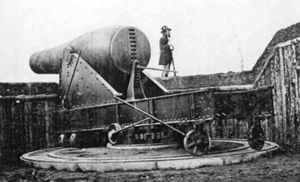 |
| Fort Foote (1863-1878) - A U.S. Civil War era Coastal Fort named for Commodore Andrew H. Foote on 1 Oct 1863. The garrison was removed 10 Nov 1878 and the fort was abandoned. http://fortwiki.com/Fort_Foote |
68 DESCRIPTIONS OF MILITARY POSTS.
FORT FOOTE, MARYLAND.
KEPORT OF ACTING ASSISTANT SURGEON, JOHN. H. BAYNE, UNITED STATES ARMY.
Fort Foote is situated immediately upon the Potomac Hivrr, on the Maryland side, about eight miles below Washington City, on an elevation of land known us llozer's Bluff, at an altitude of about 100 feet above tide-water. In the rear of the fort is an extensive gorge, varying in depth from 10 to 100 feet, running the full extent of the reservation, and continuing thence to the Potomac River. A marsh about 400 yards wide, and covered with a thick growth of coarse grass and small trees, extends along the margin of the Potomac, in a northerly direction, to the distance of a mile. About a mile and a quarter below the post, in a southeasterly direction, is located a marshy tract of land of at least 200 acres, called "Broad Creek;" one-half of its area is clothed with a luxuriant growth of tall coarse grasses, interspersed with scrubby trees and bushes; the other half is composed of mud banks, the accumulation of years, brought down by floods from the hills and valleys above.
This post was established in 1862, as an adjunct to Fort Washington, four miles distant, and
was first occupied by the Ninth New York volunteers, under command of Colonel Stewart.
The fortification is constructed of earth and green timber. The quarters of the garrison, the
hospital, and other buildings in process of erection, are eligibly located upon the height back of the fort. The barrack is a new two-story wooden building, 160 feet in length, affording a sufficient capacity for two companies. The walls of the building are lined with brick, and a veranda extends its whole length in front, with a roof formed by a continuation of the roof of the building. The barrack is warmed by stoves, artificially lighted by candles, and ventilated through the roof. The dormitories, 78 by 23 feet, and 9 feet high to the caves, would each accommodate 33 men were each man allowed an air space of 600 cubic feet, but double that number have been placed in them. They are two in number, and occupy the second floor of the building. Iron bedsteads, similar to those used in the hospital department, are furnished, and over each is a shelf for the knapsack of the soldier.
The lower floor of the building contains a wash-room, mess room, kitehen, library, office, &c. The kitchen is large, and has two store-rooms adjoining. The mess-room occupies about one-third of the area of the first floor, and contains two rows of tables.
Married soldiers' quarters are five new rooms, 16 by 12 feet, one room to each family, with a porch in front, and kitchen attached to the rear of the building. Officers' quarters are two frame houses, lined with brick ; each house is a double set of quarters, each set containing four rooms.
A bomb-proof within the fort is occupied as a guard-house and prison-room ; being an earth-work, and the timbers somewhat decayed, it is illy adapted for the purposes for which it is used. It is sufficiently heated by a wood-stove, but the ceilings, which are of decayed logs, admit water in rainy weather. The floor is damp, making it very uncomfortable for the occupants. The guard, house and prison-room are doubtless causes of much sickness at this post, as nearly every private soldier in the garrison has to occupy one of these rooms underground every alternate night on guard duty.
The post bake-house is a commodious wooden building, with brick oven attached sufficiently large to turn out 350 rations of bread in a batch. The water supply is obtained from a well, a spring, and several small cisterns. There are no underdrains or sewers at the post. A system of leveling, grading, paving, and draining has been so thoroughly and unremittingly pursued that the grounds have been rendered comparatively firm and dry.
Endemic dysentery and diarrhosa have prevailed at Fort Foote with great severity during the last six months, (ending December 31, 1869,) which, superadded to the autumnal disease incident to this locality, rendered the percentage of sick very large in proportion to the command, and as tlie first two named diseases have been exclusively continue! to its limits, it is difficult to account
for their origin and prolongation.
Situated in a malarial district, interinittents, remittents, malarial dysentery and diai-rlm-a
prevail at this post during the autumnal months ; but for the period above mentioned the proportion of sickness has been far greater than that of previous seasons, while Fort Washington, a few miles below, on the Potomac River, with malarial surroundings very similar, has enjoyed the most perfect immunity from disease. The morbific, agent would thus appear to have a local origin, even within the limits of the post; but after the most careful investigation it is impossible to arrive at any satisfactory solution of the, difficulty. The cases have nearly all been very protracted, varying in duration from one to four months, and presenting nearly the same series of morbid phenomena.
The post and hospital gardens contain about three acres. Potatoes, onions, and cabbages are raised in abundance for the supply of the small company at present forming the garrison.
Saturday, May 07, 2011
John H. Bayne of Salubria Prince George's County Slave-owner and Abolitionist, Horticulturist and Physician, Politician and Citizen - Scientist
In some sense the story of John Bayne of Salubria - physician and horticulturist, slaveholder and abolitionist, Senator and citizen - is the story of the unwilling partnership that built Prince George's County, Maryland. Farmer and politician, natural philosopher and citizen scientist, a slaveholder whose support of that evil and peculiar institution came to affect him personally and tragically as it affected the slave which he owned. His story is that of a tortured route to support the abolition of slavery which had benefited him and a privileged minority in the State of Maryland.
The industry of Prince George's County in the early 19th century was overwhelmingly agricultural providing great wealth that came "from the land, tobacco, and from slaves." Indeed, "more slaves worked here than in any other county in the state, and the gentry, the old families who led our social and public life, lived in a style befitting the legends that linger about them." Moreover, the plantation economy of Prince George's County was at its height. By 1860 the county was producing more than thirteen million pounds of tobacco annually. In addition to tobacco, the area produced more than 300,000 bushels of wheat and about 700,000 bushels of corn, and local farmers owned 5,000 horses, 4,000 milk cows, 9,000 sheep, and 25,000 swine. Much of the farm work was done by slaves; among the 2,000 white families in the county, there were 850 slaveholders holding 12,500 slaves.
An 1848 report of an agricultural society's visit to Salubria describes Dr. John H. Bayne, as "the ne plus ultra of horticulturists. The committee spoke of the "wondrous delight upon his variety of fruits. But when they came to taste his delicious Elsinburg grapes, Gloria Mundi, Bell flower, French pippin, Newton Pippin, Holland do., Fall do., Roxbury Russett, English do., Pennock's winter Golden pippin, Redstreak, Siberian crab, Baldwin Winesap and winter Catlin apples, peaches, lemons, &etc, they unanimously agreed, that to Doctor Bayne must be awarded the premium for the best variety of fruit. The committee award to this gentleman another premium of five dollars for his pears and flowers, the only ones exhibited." Pauline Collin writes that "Dr. Bayne was not only a prominent doctor, but an active participant in horticulture and politics. He farmed his own land and his father's lands and is credited with taking the tomato out of the garden curiosity class and making it a field crop." He was also a close associate of Charles B. Calvert of Riverdale, and assisted him in the planning of the College of Agriculture at the University of Maryland and a friend of Thomas G. Clemson (of Clemson University fame)."
Dr. John Bayne was born on February 15, 1804 in Maryland. An influential slaveholder of Prince George's County during the nineteenth century, he was a physician and served as a state senator during the Civil War (1861 – 1865). One of most consistent roles Bayne played was to advocate for all Maryland slaveholders who witnessed their property literally walk away during the chaos of the conflict. As other slave holders also lived in his neighborhood—in particular, Thomas E. Berry at Oxon Hill Plantation—cross-plantation communities among the slaves developed. These connections were important in flight attempts, for blacks from neighboring plantations often ran together. Indeed, when Bayne's slave Sam Tyler fled Salubria in December 1840, his owner suspected that he had run off with one of Berry's Oxon Hill slaves, a man named Jacob Shaw.
President Lincoln gave Dr. Bayne a commission as a high-ranking surgeon in the Union Army during the Civil War. Bayne frequently consulted the White House and Maryland's Governor to deal with the problem. In the end, however, neither Senator Bayne, nor his fellow slaveholders could stop self-emancipation efforts of enslaved Marylanders. By 1864, John Bayne foresaw the inevitable end of slavery and wrote a declension speaking out against slavery in favor of a unified nation. Partially in recognition of this, Maryland lawmakers finally abolished slavery in the state with the Constitution of 1864.
John Bayne was the owner of the Salubria Plantation in Southern Prince George's County, Maryland. Bayne owned a number of slaves and witnessed resistance on his plantation through destruction of property, harm to his family, and slaves running away. On November 6, 1834 a fourteen-year-old slave named Judith, poisoned Bayne's two sons, George (7 years old) and John (5 years old), who died days later. Judith was interrogated and confessed to the crime. She further admitted attempting to burn the dwelling house at Salubria and killing Bayne's infant daughter Mary Catherine two years prior. According to newspapers of the time, no one understood Judith's motives at the time because "she came from a nice family." Although Judith was only 14 at the time, she was tried and hanged. The children of Dr. Bayne and his wife Mary are buried in the Apple Grove Cemetery in Fort Washington. John Bayne died on August 18, 1870 and is buried at the St. Barnabas Episcopal Church Cemetery in Temple Hills, MD.
1 Chapter 5 The Washington Years Alan Grubb http://www.clemson.edu/cedp/cudp/pubs/tclemson/05grubb.pdf
2 The American Farmer, and Spirit of the Agricultural Journals of the Day Samuel Sands 1848
3 Along the Shores of the Potomac in Prince George's County A local History from TantaCove Garden Club 1992
4 PG County Pictorial History and Stones and Bones
5 © Copyright February 06, 2007 Maryland State Archives http://www.msa.md.gov/megafile/msa/speccol/sc5400/sc5496/010500/010538/html/010538bio.html
Monday, March 28, 2011
What is the purpose of our county government if not to care for the least among us?
We are letting our county and its communities decline even as we find ways to support the concentration of wealth in the hands of a few. We have money to spend fighting wars abroad but what exactly are we defending if we can not support the least among us? If we can not fund research, or education, or infrastructure, or social programs, what are we fighting for exactly? Why are we able to constantly find ways to support the rich but we can only cut support for the poor? Why can we find tax dollars to rescue the wealthy from their blunders but not a penny to help those oppressed by concentrated wealth? Where once we had a government of the people now we have a government partnership with wealth.
A letter from Douglas E. Edwards, Vice President of Coalition & Founder/President/CEO of
Mission of Love Charities, Inc.
To All Nonprofits in Prince George's County and those from other jurisdictions who are sympathetic to our cause:
Please attend this most important meeting ... It's too late to get on board after the fact, you need to stop what ever you are doing and join with us to send a clear message to the County Executive, that we will not allow his administration to kill the poor and blame the nonprofits for their death.
This is not to say that all nonprofits would fail, there are some that would simply cut staff, cut trips they generally take to conferences, cut printing and publications, e.t., but those of us who provide direct services like Mission of Love, and I'm certain that there are others, to cut us by 1/3 or $1.00 and we would be out of business. And, who knows, that just might be the plan, to drive some of us our of business that might serve as a thorn in their side, but reminding people that we do have poor people living in our affluent African American County.
Mr. Hamler talks about helping to secure federal funds ... even if that were true, that fact is that Mr. Hamler knows that the federal government announced its cutback long before the county announced theirs. So to make you believe that there are federal dollars available is disingenuous at best. Not only are we not going to be able to get grants from the feds, the feds have already moved to cut CDBG funding by billions with a "B", and our county officials knows that as well. I point this out specifically because they are not being honest with us in terms of where we can go for supplemental funding ... there are none there.
If these cuts goes through, or if we are retaliated against for fighting this proposed budget reduction, think of the number of poor people that will suffer. My organization alone provides services to between 10, 000 and 12,000 poor people annually. Again, think about the number of poor people that would suffer, some even turning to crime (and we know from recent statistics that it cost much more to imprison than to assist or to educate) to feed, clothe and keep a roof over the heads of their families.
To cut our budget by 1/3 or $1.00 would be a death sentence for Mission of Love Charities, a 20 year old African American owned and operated nonprofit.
Wednesday, February 23, 2011
Prince George’s County Maryland must not Close the William S. Schimdt Outdoor Education Center
Prince George's County, Maryland, in a continuation of short sightedness brought on by an inability to find creative funding solutions for education, prepares to ax its William S. Schimdt Outdoor Education Center with its science programs that focus on environmental education. This is not surprise in a county that feels it can pave its way to success even while being amazingly myopic about the long term implications of these decisions. The economic excuse does not go far, even if some in the county continue to think of open space as an invitation to plunder. An uneducated and unaware student body will come of age woefully unequipped do deal with problems of clean air and clean water, just to mention a few examples, because of decisions some in Prince George's County would take to fix today's economic budget challenges. We can not say that the students of an urban county are not worthy of exposure to environmental science and the impact of ecological system services and resources to them in their future.
Defunding the William S. Schmidt Outdoor Education Center ranks right up there with eliminating the arts as one more financial decision based on an expediency of the moment - no Art, no Science, no Literature…what subject, exactly, do our elected school board members think is important to a student's education? If we cut enough, we will not need their services for the school system will simply be an institution marking time at tax payers expense delivering nothing of value to anyone.
For forty years the William S.Schimdt Outdoor Education Center has provided incalculable value to the students of Prince George's County and therefore to the county itself. The William S. Schimdt Outdoor Education Center has provided science education and social studies in a direct, hands-on overnight program for 5th graders. In addition the Schimdt Center is a resource for teacher and a partner for numerous non profits that work together to build and enhance a county of excellence. If our school board cannot rise to the occasion and find a creative solution, the William S.Schimdt Outdoor Education Center will be closed reinforcing the message that the environment is unimportant precisely at the same time that the rest of the world is recognizing the dramatic, specific and crucial impact of ecosystem services and resources has and will have on each and every one of us.
And one last little thing: closing the Schimdt Center violates COMAR 13A.04.17.01E taking the county backwards to the past instead of forward to its rightful place of excellence in the future. And what is COMAR you ask? COMAR is the Code of Maryland Regulations which reads in part: "All students shall have the opportunity to participate in the comprehensive environmental education program required by the regulation to meet their graduation requirements in environmental literacy."
Call your county and state politicians and of course call the school board members and loudly tell them NO
Subscribe to:
Posts (Atom)