.jpg)
Tuesday, May 29, 2012


Saturday, May 26, 2012
Prince George's County Historic Preservation Organizations and Groups
 |
| Newly restored Ridgeley Rosenwald School |
Prince
George's County Maryland is rich in history and has historic preservation partners
and friends in depth. Working with each other and with local and state agencies
these county organizations provide the political will and the support-in-kind necessary
to preserve the past to learn about tomorrow.
We
have a richer community and a better quality of life when we can touch the
past. The county historic preservation groups enable all of us to learn more about
ourselves for who we are is inextricably rooted in who we were and where we may
be going.
 |
| Riverside Field / Columbia Air Center / Croom Field |
Occasionally historic preservation is perceived as an inconvenience to development. In truth, however, historic preservation, when included in broad economic development plans and execution, becomes a benefit to the entire community as part of an integrated approach to economic progress.
Historic preservation is a tool of education for those who live here as well as
those who visit. Historic places and structures are living extensions of
libraries and learning. They provide a context for important conversations and debates.
Historic preservation is not anti-economic-development; it is
pro-community-development.

- Prince George's African American Museum & Cultural Center "Our mission is to celebrate and inspire the Community through the cultivation, preservation, and presentation of the cultural and artistic contributions of African Americans in Prince George’s County, Maryland. As the heart of the Gateway Arts District, we believe that we have an obligation to the community to promote collaboration, engage unlikely allies in dialogue and encourage participation in the creative process. We value our role as a ‘town square’ where dreams can grow and ideas ripen, where everyone’s voice can be heard, and where we learn from each other. Only in this way will we create true bonds between our institution and our public." http://www.pgaamcc.org/
- Prince George's Heritage "Our goal is to assist residents and officials within Prince George's County to highlight the challenges facing our community to preserve our shared heritage. Prince George's Heritage, Inc. is the official advisory organization of the Maryland Historical Trust in Prince George's County. Its grants program supports preservation, education, and restoration projects." http://www.pgheritage.org/
- Prince George's County, Maryland Chapter of AAHGS [Afro-American Historical and Genealogical Society] Our objectives are to promote Black History in Prince George's County, to encourage the historical and genealogical studies of African Americans currently residing in the county, and to support the goals and objectives of our national society. To reach these objectives, AAHGS-PGCM conducts activities such as: workshops, speaker forums, discussion groups, onsite research, speakers bureau, exhibits, and networking. AAHGS was organized in July 1994 and chartered 28 April 1995 as a non-profit volunteer organization." http://pgcm.aahgs.org/
- Prince Georges County Historical Society Our mission is one of preserving and promoting the County's long and diverse history through: Reproducing new and out-of-print historical materials; Collecting records, documents, photographs, and artifacts reflecting the County's social, economic and political history; Operating the Frederick S. DeMarr Library of County History; Providing educational opportunities through lectures, programs and tours; Recognizing and supporting individuals and organizations that are making significant contributions to the preservation of the County’s rich multi-ethnic, multi-cultural heritage. Founded in l952, the Society is an all-volunteer, non-profit organization." http://www.pghistory.org/
- African American Heritage Preservation Group "A preservation advocacy organization that promotes the preservation of the heritage of African Americans in Prince George’s County, Maryland." http://www.facebook.com/pages/African-American-Heritage-Preservation-Group/10150156704560125
- Prince George’s County Historical and Cultural Trust "Is a county-chartered, independent non-profit organization whose mission is to foster a sustainable and diverse community through advocacy and education by engaging our civic and government leaders in a collaborative process that empowers the residents of Prince George’s County to explore and preserve our cultural heritage.´ http://pgchct.blogspot.com/
Sunday, May 13, 2012
The dramatic and exuberant finale of the Prince George's Philharmonic 2011-2012 season
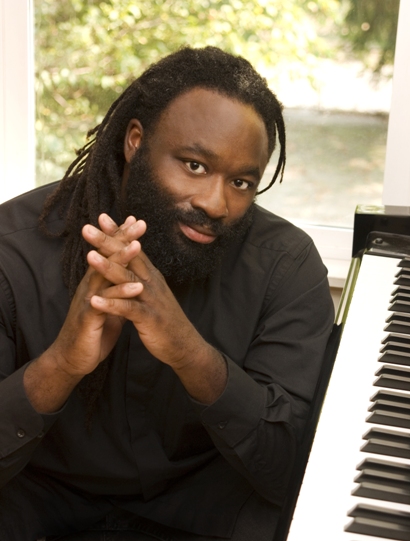 |
| Awadagin Pratt |
The
final Prince George's Philharmonic concert of the 2011-2012 season took place last
night at the Clarice Smith Performing Arts Center, at the University of
Maryland, College Park.[1] The
audacious and demanding program was filled with drama and exuberance. The
technical demands on the soloist and the orchestra made every moment of the evening
a musical cliff-hanger and emotional roller-coaster. The program started with Tahiti Trot, Op. 16, Dmitri Shostakovich's 1927 version of "Tea for Two" from the musical No, No, Nanette.[2]
The
evening then began in earnest with the introduction of the evening's soloist, Awadagin
Pratt, the first African-American pianist to win the Naumburg International
Piano Competition. Mr. Pratt has since then, " performed with nearly every
major orchestra in this country [the United States], at the Clinton White
House, and on Sesame Street" (Cruice 2000).[3]
Mr. Pratt began with an program intermezzo of two solo piano pieces by Fred
Hersch, the first of which, Nocturne for left hand alone, gave a glimpse of the power
and technical mastery of the piano that was to come in the Gershwin. As a
student of piano and music composition, I was astounded at Mr. Pratt's ability
to bring out the inner voices of the piece - a technical skill that would be
applied with gusto and vigor in the Gershwin Rhapsody that followed.
The
first half of the program featured the extremely familiar Gershwin Rhapsody in Blue. Repeated hearings of this warhorse
of the American 'classical' repertory may have led me to expectations that exist
only in my mind's ear. The orchestral piece's famous clarinet solo opening was slightly
askew, and things rapidly went astray from there. And I mean, given the extraordinary tempo that
the collaborators chose - things rapidly went wrong right from the beginning. Mr. Ellis however demonstrated his strong
bond with and control of his musical partners and by the end had managed to
wrangle all the orchestral sections into some semblance of togetherness. A side
effect of the struggle to get with the chosen tempo was the orchestra's tendency to overwhelm the soloist. As a pianist, I was stunned to hear a grand piano
disappear, a feat that I had not thought possible. But that is the hubris of a once very young student of piano. In this concerted musical struggle, the orchestra
surely 'won' out much to the loss of the audience.
The soloist,
Awadagin Pratt, on the other hand, was brilliant.
The commercialization for reason other than music of this famous piece makes
any interpretation extremely problematic. Mr. Pratt's extraordinary technical
fireworks and his well-honed skills at bring out melodic and rhythmic features
that are usually subsumed by the broader familiar tropes were quite amazing. I
continued to be fixed on the inner musical voices and equally important inner
rhythms that Mr. Pratt found and showcased. Mr. Pratt's interpretation has made
me revisit this old favorite in a new light, and that is a sure sign of a great
artist. It should be noted that the incredible speed of the performance hid some if not much of the structural integrity and complexities of the piece the result of highlighting some of the performance pyrotechnics.
After
intermission, and with some in the audience, including me, fearing the worst,
the Prince George's Philharmonic began its journey through the dramatic universe
of Shostakovich's Tenth Symphony. My pen and paper were ready to record the details
- I was so drawn into the performance that I wrote nothing. The performance was a first-class incontestable tour de force for the orchestra - first
rate unbelievable, emotionally wrenching
experience. All of the earlier technical performance problems had melted away
in the presence of the monumental symphony
of the giant of 20th century classical music, Dmitri Shostakovich. There is nothing
easy or simple about the Tenth Symphony. It is 50 plus minutes of drama and intensely
tragic music, followed by 5 minutes of heroic cheering for having reached the
musical summit. The Prince George's Philharmonic took the audience from the
depths of musical despair to the mountain tops of human emotion in a world class
performance.
From the
slow first movement filled with expectations of dread to the havoc-wrought, machine-gunned-filled second movement the orchestra performed as a cohesive ensemble,
allowing the conductor to pull from it every shred of gut wrenching emotion he
could find. The dance like conversation of the third movement, and the musical
references to the composer and his loves were done with a professional bravura
that allowed the listener to be enveloped by the structure and the sounds of
the music itself. By the time we the audience and the orchestra reached the grandest
of finales, we knew we had been together
on a journey through the universe of dark demands and dramatic dreams.
Prince
George's County's very own Philharmonic can rest assured that it closed its
season on the highest note of excellence. Its conductor and its performers took
those of us in attendance on a musical journey that was seared into the
collective memories. The orchestra reached the top and deserves every accolade
for its last performance of the season. I am proudly Prince Georgian and among
the many outstanding reason why is the Prince George's Philharmonic.
[1] Prince
George's Philharmonic http://www.pgphilharmonic.org/
Saturday, May 12, 2012 - 8:00pm
Clarice Smith Performing Arts Center, College Park, MD
Charles Ellis Conductor - Awadagin Pratt, Piano
Shostakovich Tahiti Trot, Op. 16
Hersch Nocturne for left hand
Valentine
Gershwin
Rhapsody in Blue
Shostakovich
Symphony No. 10 in E Minor, Op. 93
[2] About the
Piece. LA Philharmonic. [accessed May 13, 2012]
"Shostakovich treats his
material faithfully, including the verse (twice) in his setting, but the mock
heroic opening for muted brass lends a swagger that provokes the first of many
smiles during Tahiti Trot. The famous melody is entrusted to various percussion
instruments, then to alternately sleek and syrupy strings. The capricious
scoring, which calls for glissandi in trombones, then piccolo, ensures that the
mood is more than a bit silly."
[3] Awadagin Pratt. Wikipedia.
[accessed May 13, 2012] see also Awadagin Pratt Home page http://www.awadagin.com/biography.htm
Thursday, April 26, 2012
College Park Airport: History of HiTech in Prince George's County
 |
| The Wright Military Flyer is set up on a launching rail at College Park in 1909. |
College Park, Prince George's County was once the Cape Canaveral of the United States with all eyes on the events that were taking place there just over a century ago. The Brownsville Daily Herald of October 09, 1909 tells the story of invention, discovery and hitech accomplishment in Prince George's County:[1]
"Makes a World Record in his Flight of
Yesterday" College Park, Md., October 9 - With practically a dead calm
settled over College Park, Wilbur Wright today broke the world's record for
speed in his aeroplane over a meter course including a turn beyond the course,
his time being 58 3-5 seconds or 20 seconds less than that of Delagrange over a
similar course in France. Wright obtained
a speed of 46 miles per hour for the distance."
"Cross-Country Flying is to be Program of Government Aviators" read the headlines of The Washington times., September 05, 1911, LAST EDITION, Page 4:[2]
"A big
program of cross-country flights for this week has been mapped out by Capt.
Paul Beck, of the Government aviation school at College Park. Provided the weather is good the surrounding
country within a radius of forty miles will be visited by the Army flyers.
Benning was
visited yesterday and the flights were so successful that men are anxious for
other flights.
This
afternoon Annapolis will be visited.
Three machines will make this trip.
Captain Beck will lead the fleet in his last Curtiss biplane and Lieutenant
Arnold will sail over in his old Wright.
Lieutenant Kirtland will go in the Burgess-Wright. Four o'clock is the time set for the
departure of the flyers, and they hope to return by sundown.
Baltimore
comes next. The officers plan to sail to
that city Thursday or Friday, possibly Thursday. They will leave in the morning about ten
o'clock and return in the afternoon about sundown.
The line of the flight will be directly over the Baltimore and Ohio railway
tracks. Captain Beck will in all probability
wait until the last 10:15 train passes College Park on its way to Baltimore and will try out his biplane
in a race against the express. He
figures that he can beat it into Baltimore by at least ten minutes.
With
prospects of good weather during September, the officers will make a number of
cross-country flights. Washington again
may have the opportunity of seeing the machines sail over the city.
Realizing
that each aviator at the Government school has learned about all there is about
plain sailing around an aviation field,
the men are going to seek other work, and naturally the next move will be to
make long and more daring flights."
" Return of Aviators from Benning Proves a
Splendid Flight" The return of Capt. Beck and Lieutenants
Kirtland, Arnold, Kennedy and Private Whalen from Benning to College Park last
evening was splendid. The flyers made
the trip back in much shorter time than in going over, for a wind was behind
them. Lieutenant Arnold carried Lieutenant Kennedy as his passenger, reached
College Park at 6:27, returning in seven minutes. When over Hyattsville a distance of two miles
from College Park , Lieutenant Arnold cut off his engine and volplaned all the
way to the aviation field. He was up 1,500
feet at Hyattsville, and after cutting
off the power his machine sailed perfectly the two miles to the hangers.
At 6:42
Lieutenant Kirtland and Private Whalen returned. They made the trip in exactly seven minutes,
too. When at Riverdale Lieutenant
Kirtland turned his machine nose downward and glided from an altitude of 1,000
feet to a perfect landing on the aviation field.
Captain Beck
make a moonlight trip in returning. He
did not get back until 7:06, Two big bonfires were built on the aviation field
to guide him in making a landing. The
whir of the propeller on the fast-flying Curtiss was heard when the machine
reached Hyattsville, and instantly the privates at the school started the
bonfires. Captain Beck was not sighted until
within half a mile of the field, and he was only visible on a line with the
moon. Flying at the rate of over a mile
a minute, Captain Beck swooped over the field and made a beautiful landing.
Four minutes was the time on the return."
1909 Cpl.
Frank Scott Drive
College
Park, MD 20740
301-864-5844;
TTY 301-699-2544
Hours of
Operation:
Daily, 7
am-10 pm
for more information check out: http://www.collegeparkairport.org/
[1] Wright
Scores Again. Daily Herald of October 09, 1909. Library of Congress. [accessed
April 26, 2012] http://chroniclingamerica.loc.gov/lccn/sn86099906/1909-10-09/ed-1/seq-8/;words=Park+College+Wright?date1=1908&rows=20&searchType=basic&state=&date2=1910&proxtext=College+Park+%2B+wright&y=1&x=8&dateFilterType=yearRange&index=0
[2] Cross-Country
Flying is to be Program of Government Aviators . The Washington Times.,
September 05, 1911, LAST EDITION, Page 4. Library of Congress. [accessed April
26, 2012] http://chroniclingamerica.loc.gov/lccn/sn84026749/1911-09-05/ed-1/seq-4/;words=Park+College+Arnold?date1=1911&rows=20&searchType=basic&state=&date2=1913&proxtext=College+Park+%2B++Arnold&y=15&x=20&dateFilterType=yearRange&index=1
[3] ibid. Return of Aviators from Benning
Proves a Splendid Flight
Friday, April 20, 2012
Norton Brown Herbarium: Right here in Prince George's County, Maryland
http://ipetrus.blogspot.com/2012/04/herbarium-norton-brown-umd-record-of.html
Right here in Prtince George's County: the Norton Brown herbarium located for the time being at the University of Maryland. The Norton Brown Collection is fortunate to actually have a home for we live in a time when archival collections are being discarded for reasons of space, cost and erroneous assumptions about the state and condition of the infrastructure of knowledge that supports our life styles and civilization. The Norton Brown Herbarium stands as a lonely sentinel against the idea that everything you need to know is on the internet.
Right here in Prtince George's County: the Norton Brown herbarium located for the time being at the University of Maryland. The Norton Brown Collection is fortunate to actually have a home for we live in a time when archival collections are being discarded for reasons of space, cost and erroneous assumptions about the state and condition of the infrastructure of knowledge that supports our life styles and civilization. The Norton Brown Herbarium stands as a lonely sentinel against the idea that everything you need to know is on the internet.
Sunday, April 15, 2012
The weather is great in Prince George's County, Maryland, but your garden needs water
The
present highly unusual weather here in Prince George's County could be quietly
having dramatic impacts on your landscape. It is all too easy to think of the
weather only in terms of our personal well being - how wonderful this sunny
early summer feels to us and how fortunate we feel not to have had drifts of
snow and ice, as well as almost no freezing temperatures to be concerned about.
The flowers of spring are coming and in many cases have gone and we are drawn
to the garden and to the grandee centers filled with an urge to buy and plant.
This amazing
spring follows and unusually wet and cool summer last year, and many of us may
have forgotten the high art off watering the garden, especially newly planted
landscapes. The lack of significant rainfall is beginning to worry me, and if
you have new plantings it should be of maximum concern to you too. If you have
reseeded your lawn, never a good idea for spring in normal years, this year you
MUST be irrigating/watering: working towards one inch of water on the whole lawn
a week and more frequent daily, light watering of the seeded areas until the
grass is up at least an inch. Don't forget to cut your lawn high now at least
2.5 inches - three inches being better - to help the turf stay vigorous and
healthy in the early heat and rain deficit. And some watering of vegetable
gardens newly seeded or planted is warranted lest your work be for naught. This
even applies to summer flowers if you are sneaking them in early in anticipation
of no more frosts or freezes.
And the established
plantings and landscape especially woodland planting of hostas, azaleas etc may
begin to want for water. Low humidity and high temperatures may be comfortable
for us, but your garden plants are going to begin to wilt and suffer if you cannot
find the time to help them out with a little artificial rainfall - or better
yet water from your rain barrels delivered through your drip irrigation system
Monday, April 09, 2012
Hitech investment in Prince George's County
Prince George’s
County, MD is located in one of the world’s leading science research and
technology transfer environments and within one of the largest and fastest
growing state biological and agricultural science clusters in the United
States. The research environment "encompasses universities, research institutions
and federal agencies with significant and largely untapped potential to create
commercial products, drive new bioscience company growth and deliver
substantial economic impact according to a report commissioned by Prince George's
County in 2009. The heart of the research cluster is in Prince George's
County's hitech agrobio-technology crescent, which includes the UMd, BSU, USDA
APHIS and ARS, ARL, FDA and NASA. In a geographic sense the research
environment is effectively runs along an innovation corridor that stretches
from the District of Columbia north through western Prince George’s County
along US 1 to Howard County's Johns Hopkins University Advanced Physics Lab
(APL). In other words, this is real economic development potential waiting for Prince
George's County to notice, and waiting in some cases for over 100 years in the
case of BARC.
The
Governor of Maryland has noted that our "State is home to nearly
500 bioscience companies and 50 research-intense federal institutes and
centers. Maryland is well positioned in the global bioscience industry and has
been recognized by the Milken Institute as one of the top tier states highly
specialized in overall bioscience development. Since January 2010, the Federal
Facilities Advisory Board has been developing a strategic plan to strengthen
our partnerships with federal facilities like the NIH, so that we can expand
opportunities for federal contracting and procurement, create jobs and grow
Maryland’s economy." Prince George's should be actively pursuing
collaboration with its existing federal and academic partners exploring partnerships
to exploit the economic potential inherent in what is already here.
Prince
George's County should be showing the rest of the state how technology transfer
is done. Prince George's County should be taking advantage of BARC and NASA's
records of research and distribution of science to private industry; the county
should be marketing itself as the place where the world comes to learn how to
feed itself - a one stop solution to all things agriculture, for example.
And just
to be clear the State of Maryland want sot encourage private development and
investment through a series of initiatives. Based on the Governor's FFAC report Prince
George's County should be encouraging "federal laboratories to highlight
their innovation and technology to the business community. Invite federal
laboratory employees to participate and present their business ideas to venture
capitalists and businesses in the region; leveraging the State’s early seed
funding programs such as Maryland Industrial Partnerships (MIPs) and the
Maryland Technology Development Corporation (TEDCO), in partnership with
Federal Laboratory Small Business Innovation Research (SBIR) Programs to support
startup corporations. Phase I SBIRs could leverage MIPS or TEDCO support; and encouraging
and incentivizing federal employees to commercialize their ideas in the state’s
incubators; working with federal representatives to devote resources that
encourage employees to submit patents and commercialize ideas."
Table 1 INTERIM REPORT TO THE GOVERNOR AND LEGISLATURE 2011
|
Area of Importance
|
Recommendations
|
Tactic
|
Status
|
|
Cyber Security
|
Creation of the National
Cyber Security Center of Excellence (NCCOE) at the National Institute of
Standards and Technology (NIST)
|
Develop and disseminate a
white pager to the O’Malley-Brown Administration and the Maryland
Congressional Delegation for the creation of the NCCOE
|
In process; Senate
Appropriations Committee approved $10M for the creation of the center and
$15M for cyber research at NIST in calendar year 2010. Final action to be
determined in the 112th Congress.
|
|
Technology Commercialization
|
Create a Statewide
Technology/Business Fair
|
Encourage federal
laboratories to highlight their innovation and technology to the business
community. Invite federal laboratory employees to participate and present
their business ideas to venture capitalists and businesses in the region.
|
On-Going; the workgroup is
further developing the initiative.
|
|
Technology Commercialization
|
Encourage State/Federal Small
Business Partnership
|
Leverage the State’s early
seed funding programs such as Maryland Industrial Partnerships (MIPs) and the
Maryland Technology Development Corporation (TEDCO), in partnership with
Federal Laboratory Small Business Innovation Research (SBIR) Programs to
support startup corporations. Phase I SBIRs could leverage MIPS or TEDCO
support.
|
On-Going; a tech transfer
resource manual has been developed to evaluate current resources and outline
how to improve on and create new programs.
|
|
Technology Commercialization
|
Create a Federal Venture Fund
|
Encourage and incentivize
federal employees to commercialize their ideas in the state’s incubators. The
federal government should devote resources that encourage employees to submit
patents and commercialize ideas.
|
On-Going; coordinating
efforts with University of Maryland System.
|
|
Federal Procurement
|
Develop a “Team Maryland”
Network & Mentoring Program
|
The Network will be comprised
of business development professionals from large, medium and small
Maryland-based companies who market products or services to the federal
government. It will foster cooperation between Maryland-based companies by
teaching small companies best practices and providing “teaming” opportunities
that can increase federal procurement expenditures in the State.
|
Created; 46 companies have
signed up for the Network, including Lockheed Martin, Northrop-Grumman,
ARINC, Smartronix, ERT Corp, CSC and Raytheon. The last planning meeting was
held on February 18, 2011.
|
Saturday, April 07, 2012
Can Prince George's County Manage a World-Class Convention Center?
In
the on-going fight over bringing gambling, gaming, casinos and or slots to
Prince George's County, much time has been spent selling the proposal as good
for the County as a whole. Interestingly enough, early on gambling in the
county was sold as good for the historic horse racing industry. That pitch disappeared
because the market interests of gambling no longer need the political cover
provided by the racing industry. The apparent reshuffling of reasons is an example
of why there is public distrust and consternation over the current marketing support
strategy. Residents with long memories sense a three-card monte at work in the
repeated, incessant selling of gambling at National Harbor as somehow in the
self interest of most people in the county. And, this political approach has
created controversy where little should be.
National
Harbor is a signature development in and for Prince George's County and the
Washington, D.C., region. It will produce jobs, and it will draw visitors to
the county. The convention center and meeting spaces will be seen as a
significant infrastructure available to businesses that might decide to locate
in the area. In order to be competitive, National Harbor's management is
seeking to overcome the challenges its convention marketplace faces. A few of
the obstacles in front of National Harbor include a change in business and
recreational travel dynamics over the last decade coupled with 21st century
internet enabled meeting tools. National Harbor has to provide a wide, deep and
full suite of supporting amenities and opportunities to encourage customers to
make use of the capital investment in infrastructure. These important
activities include retail, dining and recreational markets. And yes, in order
to differentiate itself from a highly competitive marketplace regionally,
nationally and even internationally, world class entertainment including
gambling in the form of a casino creates a highly visible presence offering and enabling National Harbor and
Prince George's County to make the sale.
None
of this directly impacts the majority of Prince George's County residents
except for the influx of dollars into the State and Counties coffers, thereby, purportedly
off-setting the need for additional taxes or reduction of services. The project, instead of being sold to voters for what it is,
an enhancement of National Harbor's strategic marketing position, has been
couched in terms of a potential retention and enhancement of existing
businesses and an attraction for new businesses through capital as if this will
come automatically throughout the County. Moreover, the impact on the local
community, which should include the preservation of historic housing and the creation additional housing which
could contribute to ensuring the larger community remains demographically
diverse is absent, because the entirety of the National Harbor concept is to
create a self contained, self interacting world class complex that can offer
its visitors everything they want or need. The resulting change to the existing
community will be a creative reaction and response to the vibrant National
Harbor complex.
The resulting mixed messages has
obscured what is a good plan that should be sold as a dynamic convention center
and meeting space/hospitality industry project that will ultimately provide a significant
supporting role if and when the rest of Prince George's County gets around to
inviting business investment in the County. But we need to be clear, National Harbor
is not the ultimate in long term sustainable 21st century development producing
highly skilled competitive jobs; it is rather part of a sophisticated infrastructure
that would support such jobs created by next generation businesses choosing to
locate here someday when the majority in the county stops letting the powerful
few make all the policy decisions for them.
National Harbor will not fix the
chronic lack of substantive, meaningful, economic development in Prince
George's County. It is fortunate that National Harbor has the depth of assets
and resources to fight the unpredictable nature of business decision making
that the county seems determined to support. Small or mid-size, creative
business are not financially able to deal with the unpredictable, inconsistent
opaque, byzantine nature of the permitting and development process that is so
connected to the whims of the political elite. There is nothing transparent
about the development process in the county, making it a very expensive place
in which to invest. National Harbor is not going to fix these structural
problems in Prince George's County. We who can, however, must be careful not to
allow the same internal political issues to cripple the project half-way through.
If we are going to have a world class convention center as an important part of
the County's infrastructure - and let me remind you the train has already left
the station on this idea; it left when the project was approved conceptually
over a decade ago - then working together, let's encourage them to pull out all
the stops and build one (without tax dollars) that is the envy of the rest of
the nation. We need the County to sell this project for what it is an what it
could be per se.
Friday, April 06, 2012
Prince George's County Blows on the Dice
As my county, Prince George's,
works itself up to a frenzy over gambling as a sure bet economic engine for
sustainable development and growth, I take this opportunity to lay out a
conversation that could have taken place now if only our political elite
were not so invested int short term gain for a few. Bright and early this
morning, Baltimore's abc2 wrote, "Minority business owners want the Maryland legislature to use its final
days pass a measure to develop offshore wind energy."[1] Businesses which will drive high paying jobs are pushing the Maryland Senate
to follow the House of Delegates and pass the Maryland Offshore
Wind Energy Act of 2012.
We could be discussing the enabling of a county of
energy initiatives showcasing our strategic plan that would link the State's
energy policies to Prince George's County's support of investments that could
take advantage of the U.S Department of Energy's grant program which seeks to
provide support for regionally-diverse Advanced
Technology Demonstration Projects through collaborative partnerships.
Instead, of course, we are probably planning the color of the blackjack table
cloth concerned as to its impact on the part time competitive minimum wage jobs
that we are going to create.
We could be challenging our best and brightest to make
Prince George's County a hi- tech center of alternative energy systems using
in part funding, technical assistance, and federal coordination which would
accelerate deployment of these demonstration projects. In partnership with DOE
and the State of Maryland the county could work to eliminate uncertainties,
mitigate risks, and help create a robust U.S. Offshore Wind Energy Industry. We
could be reading the county created plan that outlines how it would support
businesses and job creation by creating an investment atmosphere in the
county where businesses work to design,
build and install innovative offshore wind systems in Maryland and U.S. "waters
in the most rapid and responsible manner possible, while expediting the
development and deployment of innovative offshore wind energy systems with a
credible potential for lowering the levelized cost of energy (LCOE) below 10
cents / kWh or the local hurdle price at which offshore wind can compete with
other regional generation sources without subsidies."
We could be
reading such a report but we most likely won't because there is no money to
fund such a strategic plan, all of the available funds and energy having gone
to casino support and advocacy. The US government knows that "with over
4,000 GW of gross potential that is relatively close to key load centers,
offshore wind energy can help the nation reduce its greenhouse gas emissions,
diversify its energy supply, provide cost-competitive electricity to key
coastal regions, and stimulate economic revitalization of key sectors of the
economy." Prince George's County however seems to just know about
vigorish.[2]
[1]
Push today for offshore wind bill Civil and business
leaders push for offshore. abc2.com. April 6, 2012 [accessed April 6, 2012]
[2] Vigorish, or simply the vig, also known as juice or the take, is the amount
charged by a bookmaker, or bookie, for his services. In the United States it also
means the interest on a shark's loan. The term is Yiddish slang originating from
the Russian word for winnings, выигрыш vyigrysh [1]. Bookmakers use this practice to make money on
their wagers regardless of the outcome. To minimize their risk, bookmakers do
not want to have an interest in either side winning in a given sporting event.
They are interested, instead, in getting equal betting on both outcomes of the
event. In this way, the bookmaker minimizes his risk and always collects a
small commission from the vigorish. The
bookmaker will normally adjust the odds or the line, to attract equal
action on each side of an event. Wikipedia:
[accessed April 6, 2012] http://en.wikipedia.org/wiki/Vigorish
Wednesday, April 04, 2012
Interview with an Artist - Anthony Elliott: Quarter Notes, March 2012
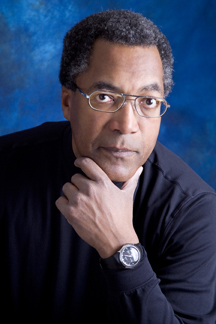 |
| Anthony Elliott |
Quarter Notes, March 2012
Artist Interview with Anthony Elliott
from "QuarterNotes: News and Events of the Prince
George's Philharmonic" - March 2012
Quarter Notes: Thank you so much, Maestro Elliott, for
taking the time to do this interview with us.
We are very much looking forward to performing with you at the end of
this month! May we start with a few
words about your background and training?
Anthony Elliott: I grew up in upstate New York, and was
lucky enough to be in a school system that included strong musical
education. In fourth grade I wanted to
learn to play drums, but the music instructor gave me a cello instead. By high school, I did play a few other instruments
– bass viol and tuba – but the cello became an essential part of my life. In high school I received a scholarship to
attend, for two summers, the music festival at Michigan State University, at
which we studied with outstanding professionals, both performers and conductors. This experience set me on my way toward a
professional career with the cello. I
was most fortunate to attend Indiana University and to study with the legendary
(and still teaching after more than 50 years) cellist Janos Starker!
QN: Fortunate indeed! Did you meet our conductor Charles Ellis at
Indiana?
AE: Oh yes!
Students were seated alphabetically in our Freshman Music Theory course,
and “Elliott” and “Ellis” became fast friends very quickly. We’ve kept in touch ever since, and that’s
how I’ve gotten to know the Prince George’s Philharmonic!
QN: This will be, I believe, the fourth time
that you have worked with the Philharmonic, and we are looking forward to
another visit next season too.
AE: Yes, I first came in 1996, and played the
Elgar concerto with the Philharmonic.
Then in February 2003, I was your guest conductor, and in October 2004,
I played a commissioned piece - a memorial to Martin Luther King. And of course I am looking forward to
performing the Prokofiev with you this month!
QN: I know that after you finished at
Indiana, you began to win prestigious honors in cello performance. The list is long, but we should mention a few,
for example the 1979 Concours Cassado in Florence, Italy, in which you were the
top-ranked American cellist; and in 1987, you won the Feuermann International
Cello Competition. Congratulations! But now, let’s talk about the Prokofiev Sinfonia Concertante. Have you been performing this amazing piece
for many years, and is it a favorite of yours?
AE: Yes, I tackled
this amazing piece of music early in my career.
As you know, it was rewritten by Prokofiev in the early 1950s from a
cello concerto that he had written many years earlier. He worked with the young but already renowned
cellist Mstislav Rostropovich on the adaptation, making the concerto flashier
and more complex, and taking advantage of the amazing virtuosity of the cello.
You have to remember that the Soviet Union put severe limits on composers, and
could ruin them by labeling them too “western” – Prokofiev poured his dark
Russian soul into this work, giving it both a sharp acerbic edge as well as an
impassioned lyricism.
But I want to tell you of my own very special experience
with Rostropovich and this Prokofiev piece.
In the early 1970s, when I was playing with the Toronto Symphony
Orchestra, and when the Soviet Union allowed Rostropovich to travel outside
Russia, the renowned cellist came to Toronto to perform with the
orchestra. I arranged to have an
audience with Rostropovich, took my cello to his hotel room, and played for him
and talked with him for about 2-1/2 hours.
Most of our time was spent on the Prokofiev Sinfonia Concertante, and he was wonderfully generous with instruction
and suggestions. In fact, after his
performance, he contacted me again with additional suggestions that had
occurred to him during his performance of other pieces. He was a most outstanding and generous
artist, and his influence on my career, especially in regard to this piece, was
huge.
QN: The Sinfonia
Concertante is a very challenging piece, especially for the performer, but
also for the audience. Many of us in the
Philharmonic had never heard it before; it is taking time and effort to get
into it, though I think that most of us are already hooked! It will probably be hard for the audience to
grasp it in just one hearing. Do you
agree?
AE: That is probably true, but my hope is that it
will raise in the audience enough interest and curiosity that they will make a
point of hearing it again and again.
QN: And what a gift you will have given
them! Thank you so much! We are really looking forward to March 31!
Monday, April 02, 2012
Gambling on more than a Few in Prince George's County
Prince George's County is all a-buzz with interest on
gambling,on gaming and in casinos as a quick fix for its budget problems. The basic idea is that lots people like to
play slots or take their chances at gaming tables. The incoming from lotteries
and the high tax rates on casinos are revenue sources for government. And
management and ownership team of a casino stand to make considerable money too.
So there is a common interest between government and casinos to see the
establishment of gaming especially in down turns in the economy . All of this
benefits in the near-term, the powerful political elite's ability to distribute
the resources of government and a small cadre of their development partners to
support their profit statements. It doesn't do much for the public at large,
outside of creating a low paying part time jobs and putting a few older hotel
and eateries out of business.
In
addition to visiting gaming tables, the lottery is another form of payment by
individuals to the government. The average American household spends $500 per
year on lottery rather than inverting in a personal savings account. This
brings me to the idea of a savings lottery, an idea that this county would
never support because it would benefit the many and not necessarily the few. A
savings lottery, already in place in other jurisdictions around the world, is a
way to feed the desire to win without producing anything and at the same tome bolster
personal savings.
A
savings lottery would appear to be a lottery ticket to its buyer with the same
feeling of a sure thing bet on tomorrow, while in actuality being a deposit
into a special savings account. The
player actually keeps, instead of loses, the entirety of his or her discretionary
bet. Prize money comes by aggregating the interest from all the deposits. Just like lotteries there could be daily,
weekly or even monthly drawings; there would be prizes worth dreaming about:
$1000, $10,000, even $1 million. The
system would attract people because more they bought, the more chances they
would get.
This is
such an intriguing idea that Prince George's County would never even dream of
considering it, because it has little to offer the elite and powerful and much
to benefit the rest of us. Our county is so busy dreaming of things that once
were, that we miss things that could be. Imagine playing a game of chance to
win $10,000 and saving the hard-earned price of the ticket at the same time.
That is what the Michigan Save To Win
program does, and what we cannot see because it would be too obvious a benefit
for many and of little use to the established powerful Prince Georgian few.
Michigan's Save to Win touts that with "every $25
you put into a share certificate at a participating credit union is another
chance to win and save. In the end, you’ll at the very least walk away with
your savings, plus interest. If you have not saved before, you are not alone --
more than half of all Save to Win accountholders did not have a regular savings
plan before Save to Win." Rather
than Win and save, Prince George's is trying hard to start the Give, Grow and
Groan - you give your money and the rich
grow richer while you groan at the cost of your support for their endeavors.
Sunday, April 01, 2012
Prince George's County Philharmonic Concert - A review Saturday, March 31, 2012
 |
Anthony Elliott, cello.
Professor, University of Michigan; Conductor, Michigan Youth Symphony Orchestra; winner, Emanuel Feuermann International Cello Competition and top-ranked American cellist in Concours Cassado, Italy; soloist with New York Philharmonic, Detroit Symphony, Vancouver Symphony, Minnesota Orchestra
|
I spent
my Saturday evening at the Bowie Center
for the Performing Arts with the Prince
George's Philharmonic . Arriving just minutes before the starting time, seats
were hard to find among the clearly excited audience. But we found seats row
four center and sat down to hear a concert of two grand compositions of the
'classical' music canon.
With
Charles Ellis, conductor, the concert began with the Symphony No. 3 in F Major, Op. 90 of
Johannes Brahms. While I initially thought the pairing of the Brahms with the
Prokofiev was a strange choice, I have to say that the contrast between the two
pieces worked better than any other substitute
for the 3rd Symphony that I could come up with.
I did momentarily think of a mid to late Haydn symphony or an early
Schubert, even Beethoven's Eighth, but as it turns out Mr. Ellis had the matter well in hand.
The Brahms's
3rd is a difficult piece to pull off. It shares the same performance challenge with
piano Sonata's of Mozart - deceptively simple until you try to play them. And it
is not the technical requirements of the performance, which are significant, that creates the biggest
problem, but rather the difficulty of making the 'simplicity' of the organic
whole stick together.
The first movement
seemed to take a little while to come together, but once the orchestra found
its musical soul, the conductor was able to showcase the quiet grandeur of the
symphony's structure. I thought the performances of the 2nd and 3rd movements
were exquisitely wrought. The early problems of various section's attack were
by then a faded memory and the listener could revel in the complex simplicities
of Brahms. I was impressed by the balance between the sections that Mr. Ellis
coaxed from the orchestra and the resulting timbres that he was able to exploit
in the performance especially in the final movement.
And then, after the quiet ending of the Brahms 3rd, it was intermission, and a
retrenchment to the back row which for me allows for a more cohesive aural experience.
I like to tell myself that the sounds of the orchestra of time to blend and age
a bit, even if this is more or less non-sensical idea.
The
Prokofiev is a major performance challenge for any orchestra and for the
soloist. And I suspect that the Sinfonia
Concertante for Cello and Orchestra, Op. 125 can be a challenge for the unsuspecting
first-time listener, too. However difficult
for the new comer, the required technical proficiency and skill on the part of
the soloist is staggering. Anthony
Elliott rocked the room. A winner of the Emanuel Feuermann International
Cello Competition in 1987, Strad Magazine wrote of him "His emotional
communication is often profound, and his glittering, silvery tone captivates
the ear". And how true that was last night. The Philharmonic was in full
accord and up to its role of not-over-powering the soloist, but rather being an equal performance
partner and artistic collaborator.
Without
a question I was bowled over by an extraordinary rendition of this late work of
the great Russian composer. The intellect, wit, humor and sarcasm were brought
forth, and the skill of the soloist and the orchestra at times were such as
to become hidden by the full brilliance of the music - which is as it should be.
As with
many things in Prince George's County, the Philharmonic deserves to be more
widely recognized. Hopefully, I can attend the last concert of the season in May. Thank you Philharmonic for a wonderful evening of great music.
Saturday, May 12, 2012 - 8:00pm
Clarice Smith Performing Arts Center, College Park, MD
Charles Ellis Conductor - Awadagin Pratt, Piano
Gershwin
Rhapsody in Blue
Gershwin “I
Got Rhythm” Variations for Piano and Orchestra Shostakovich Symphony No. 10 in E Minor, Op. 93
Tickets for the Clarice Smith Center are included with a season
subscription. Single tickets will be available through the Clarice Smith Center
box office only. Click here to purchase tickets for this concert online.
Saturday, March 31, 2012
Gambling on Prince George's County - a Lifestyle
April Fool's Day is tomorrow, and appropriately Prince
George's County is focused on bringing a casino that will secure a funding stream
for its largest stakeholder, government itself.. With a full panoply of
gambling options in place, Prince George's County will be able to offer a quick
dose of construction jobs followed by a thousand or more, part-time 12.00 an hour jobs -
jobs that pay perhaps as much as 20,000 a year. As someone who is looking for
work I am eager to apply even as I will have to move out of the county to
afford to work at the casino. But a job
is better than no job so this is a good thing.
And
there is no doubt that adding gambling is good for National Harbor. Gaming will
allow National Harbor to compete for customers in need of a large well supported
meeting space. Conventions will be enticed by the wide range of options that
National Harbor can supply its convention cliental, from shopping to betting.
As to how this will benefit small, independent hotels and restaurants outside
the control of National Harbor, the best we can say is that Darwinian
capitalism will force them to improve their offers or wither away.
Of
course I wish we were bringing a 21st century suite of employment, like an international
bioagricultral life science research facility that partnered with NASA, the
University of Maryland, FDA, and USDA APHIS and ARS (BARC and NAL). Instead of
being the county that brings an opportunity to learn about the odds of making
money by doing nothing, we could be the global destination that provides one
stop solutions to food, fuel (energy), feed, forage, fiber, flowers, fish and forests - solutions
that could feed the world.
And
while we are at it, we might take the time to ask if our political elite has stopped squabbling long enough to
decide where the new national headquarters of the FBI will be. Or is the ingrained short
term self interest of our political machine going to allow other counties to
make a clear united pitch and grab the prize of real jobs? We cannot mall our
way to economic success, nor can we gamble on games to better our lot in life.
Subscribe to:
Posts (Atom)