Kiplin Hall: Birthplace of Maryland | MPT
A must see for students and those whose desire to learn never sims
"Kiplin Hall: Birthplace of Maryland is a remarkable story of history, religion and politics that could have been ripped from today's headlines - except that it occurred over the past four centuries. This magnificent 17th century manor house in the north of England - north Yorkshire to be precise - is often described as the "birthplace of Maryland", for it was here that George Calvert, the first Lord Baltimore, developed the concept of a colony in the Americas dedicated to religious freedom for Catholics. Rising from humble beginnings without title or riches, Calvert's genius and pluck took him into the King's inner sanctum - a feat almost unheard of in those days - to become Secretary of State to King James, whom he persuaded to accept his dream of a colony."
Sunday, April 21, 2013


Monday, April 08, 2013
Saturday, April 6th, 2013, the Prince George's Philharmonic treated its audience to a splendid concert
 |
| Gabriel Cabezas, soloist Sphinx's 2012 Isaac Stern Award |
On
Saturday, April 6th, 2013, the Prince
George's Philharmonic treated its audience to a symphonic evening at the Bowie Center for the Performing Arts,
here in Prince George's County, Maryland.
The orchestra
was led by guest conductor, Anthony
D. Elliott, Professor of Cello, and Conductor of the Michigan Youth
Symphony Orchestra at the University of
Michigan. Mr. Elliott last performed
with the Philharmonic on March 31st, 2012 in an "extraordinary rendition"
of the Prokofiev Sinfonia Concertante for
Cello and Orchestra, Op. 125. [Review:
Prince Georgian April 1, 2012]
This
time Maestro Elliott lent his formidable musical talents in support of an
amazing young soloist, Gabriel Cabezas,
in a performance of one of the great cello concerti, the Saint-Saëns Concerto for Cello No. 1 in A Minor, Op. 33.
At twenty, Mr. Cabezas is the winner of the 15th annual Sphinx Competition, and
Sphinx's 2012 Isaac Stern Award. As soloist, he has appeared with the New York
Philharmonic, Cleveland Orchestra, Chicago Symphony, the National Symphony of
Costa Rica, the Pittsburgh Symphony, the New World Symphony, and the Nashville
Symphony. His technical proficiency and musicianship was partnered with the
Philharmonic's demonstrated musical ability to showcase and not overwhelm guest
soloists. The brilliance of Mr. Cabezas' playing electrified the audience.
 |
| Anthony Elliott Conductor and Cellist |
At the
end of the performance, the audience was treated to a very special unannounced
performance of the Sonata for Two Cellos in
G Major by Jean-Baptiste Barrière (1707 – 1747). With two masters of the
instrument playing together the result was magical. I asked Mr. Ellis about the tonal qualities
of the two instruments and he kindly explained to me that Mr. Cabezas played a
very good 80 year old American made cello, while Mr. Elliott's instrument was
made in Italy in 1703.
After
intermission, Mr. Elliott conducted the Brahms Symphony No. 2 in D Major, Op. 73. Sometimes referred to as the 'Pastoral'
Symphony because of perceived hints of the famous Beethoven's Sixth, and
accordingly most times performed with that reference in mind, this time Mr.
Elliott brought out what Brahms wrote about his work: that it is "...so
melancholy that you will not be able to bear it. I have never written anything
so sad, and the score must come out in mourning." The emotional content of
music was writ large in Mr. Elliott's performance
and the Philharmonic rose to the occasion.
Mr.
Elliott was able to fuse the strings, woodwinds, brass and percussion into a
personal tonal statement that supported his interpretation. This fusion of the
parts into a whole is distinct from Mr. Ellis, who produces a musical parfait
of layered distinct sounds, crystallized in a glittering sound. The
Philharmonic's ability to respond to two distinct
conducting styles and interpretations is a sign of their splendid professional
abilities.
The
evening started with a performance of Roussel's Bacchus
et Ariane, Suite No. 2, Op. 43. I was delighted that Maestro Elliott kept
the Prince George's Philharmonic tradition of a musical preview and explanation
(with the orchestra playing musical motifs of significance) to help the
audience understand what they were about to hear. Mr. Elliott began the night
with a wonderful spirited performance.
The
Prince George's Philharmonic continues to dazzle; you really need to come and
listen to this first-rate ensemble, a county treasure.
Saturday, May 11, 2013
- 8:00pm
Clarice Smith
Performing Arts Center, College Park, MD
Charles Ellis,
conductor - Michael Mizrahi, piano
Mozart Piano Concerto No. 24 in
C Minor, K. 491
Mahler Symphony No. 1 in D Major
(Titan)
Saturday, April 06, 2013
Wanted - Student Video Project Lead
The Bladensburg History Project is
seeking a student with social media platform design, production, implementation
and operation skills to assist in the creation of three short videos and
accompanying podcasts. The content will focus beyond the Battle of Bladensburg
in 1814. Proposed 3-5 minute videos topics include a tour of the historic site within
the City of Bladensburg; interviews with project researcher partners and town
officials; and an introduction to Bostwick House (or another specific historic
structure form the period of interest).
The Bladensburg
History Project:
Bladensburg was more than a
battlefield in the War of 1812. From its beginnings as a colonial seaport to
the present vibrant metropolitan Washington, D.C. community, Bladensburg has
been and continues to be a place that matters.
The Bladensburg History Project
seeks to recover the town's hidden and often forgotten past by sharing stories
about the its people, places and events that shaped the town, the state and the
nation. From the letters of George Washington,
a frequent visitor, to the oral histories of enslaved Americans, the story of
Bladensburg provides a context for exploring many themes in America and the
world.
Start Date: immediately End Date: August 31, 2013
Eligibility: Open
to High School seniors, Undergraduates or Graduates
Responsibilities
Field Production
In cooperation with other staff,
partners and volunteers, coordinates pre-production and production planning
activities including content research, layout design and story boarding;
conducts field-based video production which involves interacting with subject
matter experts, historic site managers, public officials, and the general
public, and operating all portable video
and audio equipment; transports and sets up lighting and audio equipment as
required; provides limited troubleshooting and maintenance of field production
equipment.
Post-Production
Plans and performs video
post-production tasks which includes reviewing footage, making editorial
decisions, tape logging, rough cuts, audio adjustment, familiarity with color
correction and final editing software; utilizes computer graphics and special
effects for video post-production in accordance with the overall production
concepts; compresses video projects for output; makes video products available
in a variety of formats; coordinates internal and external duplication services
as required. Experience with social media page set up; design skills with info
graphics a plus.
Minimum Qualifications
Education
Any combination of education, training
or experience which demonstrates the ability to perform the duties and
responsibilities as described. A typical qualifying background would include
advanced college level coursework in video production and/or completion of a
certificate program in television production from an accredited technical
institute.
Experience
Progressively responsible
experience in video editing/producing environment demonstrating competence in
all areas of video production. Portfolio of recent video, social media design
and implementation projects.
Knowledge of:
video production procedures,
practices, techniques, and terminology; principles of digital video capture;
production equipment operation including video cameras and recorders, audio
recording equipment, file compression, video switching, character generation,
graphics manipulation, lighting, and post-production equipment; video editing
software; proper handling and troubleshooting of broadcast quality video
production and post-production equipment.
Skill and Ability to:
Operate f analog and digital video
cameras and video editing equipment; creatively plan and translate abstract
concepts into effective visual form; work with other technical and
non-technical staff to organize and implement videotaping of instructional or
other educational related projects; work with clients and talent to be
comfortable in front of the camera; adapt video products to fit needs of
clients and target audience; optimize workflow techniques to manage complex
video projects effectively and efficiently; troubleshoot video product
complications; communicate effectively with individuals and groups; write
clearly, concisely and effectively; meet deadlines and manage multiple
priorities; research and remain current on the developments and applications of
state of the art video production technology.
Other Requirements:
Possession of a valid Maryland
driver’s license and/or able to provide own transportation in conduct of work
assignments; willingness to travel in Prince George's County, Maryland.
Compensation:
This is
a contract position with payment based upon schedule of deliverables.Please put "Video Project War of 1812" in subject line.
Contact:
John Peter Thompson, Project Manager at
ipetrus 'at' msn.com for details and information
Sunday, March 17, 2013
Baker moves to take-over Prince George's School system
This morning
brings news of a "planned" political take-over of the Prince George's
County public school system by the county executive. The news is light on
detail; what this means and how would it happen are not included in the reports
from the Washington Post. A quick, not-very-thorough-on-my-part review of the
County House Delegation's legislation does not provide any useful information.
We are
left with only the broadest concept of a proposal, therefore, which seems to
provide a mechanism for the county executive to hold accountable the next
superintendent while giving him or her immensely more power. In other words the
idea seems to be to make the superintendent answer directly to the county
executive.[1]
The school
system is broken at the political level and has been for more than a decade. It
is clear that doing the same thing over and over, while at the same time expecting
different results, is the very definition of insanity. Change at the top is
what is needed, and this change is more than a change of personalities. The
change at the top has to be a change in the processes that enable political
control of the system through new pathways of accountability for the
hard-working qualified professionals who struggle in the winds of our confused,
chaotic, parochial politics enabled by powerful self-interests. We need to place
success squarely on the shoulders of one person and, then, remove him or her
from office by ballot in four years if he or she is unable to produce results.
It is always
hard to weigh in with an opinion before the facts are laid out, but we live in
a county where we usually get the facts after a decision is made or at least
when it is too late in the process to change a decision substantively. With the
opaqueness inherent in our county's political process, it becomes necessary to
voice opinion early even at the risk of having to do an about-face when the
political elite allows mere mortals to see the actual details of their grand
design.
I
reserve judgment until I see the details of the proposal, but conceptually at a
very high level I support this structural change in the interest of actually permitting
a quality education for our citizens of tomorrow.
[1] Ovetta
Wiggins. March 16, 2013. "Prince George’s county executive moves to take
over struggling school system". Washington Post. [accessed March 17, 2013]
http://www.washingtonpost.com/local/education/prince-georges-executive-moves-to-take-over-struggling-school-system/2013/03/16/9d38d624-8d81-11e2-9838-d62f083ba93f_story.html
Saturday, February 16, 2013
Now is the time to expand libraries and library services in Prince George's County
If we
cannot afford libraries in Prince George's County, it may be time to rethink
government itself. Perhaps we need fewer high level political employees with 6
figure salaries. Where do our high priced political leaders think those of us
without jobs wit find access to computers and the internet to apply? Madison
pointed out that a functioning democracy needs open access to information for
all citizens - we seem to be heading in the opposite direction - government of
the rich, for the rich and by the rich.
Now, more
than ever, is the time to expand libraries and library services in Prince George's County. If our
government cannot figure this out, perhaps now is the time to reexamine the
government itself. Libraries in Prince George's County, the idea of public
libraries, reach back more than two hundred years. The first library in Prince
George's was in Upper Marlboro and chartered by the government immediately following
the War of 1812. Among its foremost advocates was Dr. Beanes of Star Spangled Banner
fame. He and his colleagues recognized the fundamental importance of equal access
to information for a democracy in a representative government.
Prince
George's County needs to tell the political elite that, to paraphrase the Turkish
playwright, novelist & thinker, Mehmet
Murat ildan, you can build a thousand
castles, casinos and strip malls; even with a thousand sanctuaries, you are
nothing; when you build a library, you are everything! The high and mighty seem
to have forgotten that, as “A library is a different kind of social reality (of
the three dimensional kind), which by its very existence teaches a system of
values beyond the fiscal.” ― Zadie Smith
“The
public library is where place and possibility meet.” ― Stuart Dybek
“Perhaps
no place in any community is so totally democratic as the town library. The
only entrance requirement is interest.” ―
Claudia Alta Johnson
“A
library in the middle of a community is a cross between an emergency exit, a
life-raft and a festival. They are cathedrals of the mind; hospitals of the
soul; theme parks of the imagination. On a cold rainy island, they are the only
sheltered public spaces where you are not a consumer, but a citizen instead” ― Caitlin Moran
“Libraries
allow children to ask questions about the world and find the answers. And the
wonderful thing is that once a child learns to use a library, the doors to
learning are always open.” ― Laura Bush
“The
very existence of libraries affords the best evidence that we may yet have hope
for the future of man” ― T.S. Eliot
“What a
school thinks about its library is a measure of what it feels about education.”
― Harold Howe
“The
only thing that you absolutely have to know, is the location of the library.” -
― Albert Einstein
“In the
library I felt better, words you could trust and look at till you understood
them, they couldn't change half way through a sentence like people, so it was
easier to spot a lie.” ― Jeanette Winterson
“Libraries
store the energy that fuels the imagination. They open up windows to the world
and inspire us to explore and achieve, and contribute to improving our quality
of life. Libraries change lives for the better.” ― Sidney Sheldon
“He who
has a garden and a library wants for nothing.” ― Marcus Tullius Cicero
quotes taken from "Quotes About Library" http://www.goodreads.com/quotes/tag/library?page=1
Sunday, February 10, 2013
Prince George's Philharmonic collaborates with County Highschool Students and with Peter Minkler, viola
Once
more the Prince George's Philharmonic rose to the occasion delivering a wide
ranging musical performance last night in the Prince George’s Community
College, Largo, Maryland, Fine Arts Building. The participation of Prince
George's County students in a side by
side performance of George Enescu's Rumanian Rhapsodie No. 1 in A Major,
Op.11 showcased both individual musicianship and the conductor's, Mr.
Ellis', command of the music.
The
students who played alongside the orchestra in a performance of Enescu's
youthful work were:
First violin
Melia Humphrey Suitland High
School
Kayla Carlyle Suitland
High School
Gabrielle Rogers Suitland
High School
Victor Baules Eleanor
Roosevelt High School
Second violin
Taisha Stewart Suitland
High School
Dominique Marshall Eleanor
Roosevelt High School
Rose Pierce Eleanor
Roosevelt High School
Oliver Meade Eleanor
Roosevelt High School
Cello
Krista Hyppolite No
school indicated on program
Megan Lewis Northwestern
High School
Bass
Ryan McDonald Suitland
High School
Alfred Walfall Eleanor
Roosevelt High School
Flute
Katherine Skinner Eleanor
Roosevelt High School
Oboe
Arianna Copper Eleanor
Roosevelt High School
Clarinet
Elizabeth Driver Suitland
High School
Bassoon
Catherine Silver Suitland
High School
Horn
Elliott Tapscott Eleanor
Roosevelt High School
Trumpet
Jacob Miller Eleanor
Roosevelt High School
Trombone
Jan Knutsen Eleanor
Roosevelt High School
Tuba
Josiah Herrera Oxon
Hill High School
Percussion
Emily Boluda Eleanor
Roosevelt High School
Andrew Johnson Eleanor
Roosevelt High School
The
Rumanian Rhapsodie was completed on 14 August 1901, when Enescu was still only
19 years old and, so, is an appropriate programmatic choice and compliment to
the skills and proficiency of our county's young people. The collaboration of
the orchestra with Prince George's County's finest was heard by an almost well
attended audience. One can only hope that you were there to hear the exciting
dance rhythms of the glittering composition. The attacks were clear and as
usual, Mr. Ellis found a way to highlight not only the solo parts at the
beginning, but all of the enticing musical combinations that make up the
swirling folks dance melodies of composition. From the beckoning simplicity of
the opening clarinet to the fire of the end, the musical partnership made all
us proud of our students and, for a moment, feel like Romanians.
The
concert started with another tipping-of-the-hat to student musicians with a world
premiere performance of an orchestral work by Prince George's County's own
Christopher Urquiaga, who was graduated in 2009 from my own alma mater, High Point High School in
Beltsville.[1]
Mr. Urquiaga's original composition, “Dance
in 5” went by so fast that I was left wanting more. I hope we can hear an
extended work by Mr. Urquiaga in the near future. Perhaps one of our county
businesses might consider commissioning a piece by him as part of the bicentennial
commemoration of Prince George's County's role in the War of 1812.
The
concert program was so filled with great music and performances that it is
impossible to focus on one main part of the evening. In addition to the student
partnering performances, the Prince George's Philharmonic collaborated with Peter
Minkler, violist.[2] At a preconcert dinner where I speak about the
concert program I was asked about the viola. As we enjoyed a home-made treat of
orange slices dipped in chocolate, it occurred to me that listening to a viola
is akin to the pleasure found in the finest rich milk-chocolate treats. This analogy
only begins to hint at the expressive all-enveloping music that Mr. Minkler brings
forth when he plays his viola. His performance of the Romance for Viola and Orchestra in F Maj. Op. 85 by Max Bruch was exquisite.
The orchestra was perfectly paired and supportive of the rich tones and melodic
lines that wrapped us in a cocoon of musical velvet. The sweeping main melody in all of its guises
is still playing in my head this morning.
Peter
Minkler and the orchestra finished the night with Hector Berlioz's second
symphony, Harold en Italie, Symphonie en
quatre parties avec un alto principal (Harold in Italy, Symphony
in Four Parts with Viola Obbligato), Op. 16, written in 1834. I have to say
that I am drawn to the works of Berlioz for their technical brilliance, and, in
the interest of noting my biases, not so drawn to their actualization in
performance, his Symphonie fantastique,
excepted.[3]
That said Mr. Minkler soared last night bringing his technical proficiency and
his artistic mastery to bear on this musical pilgrimage. The Prince George's
Philharmonic worked its magic well allowing the viola to shine and ride above
the orchestra in a true partnership that wonderfully framed the soloist
abilities and command of the music. Mr. Ellis demonstrated his keen attention
to showing off the abilities of his musicians as well as shepherding the
ensemble through musical adventures. Given my musical bias towards this piece,
I was much taken with the performance and still in awe of Mr. Minkler's
artistry and command of instrument, the oft-times overlooked viola. If you get
a chance to hear Mr. Minkler perform, you need to grab it.[4]
After
each concert, I continue to grow in my admiration for the level of musicianship
and artistry we have right here in Prince George's County. And I continue to be
amazed how few people have any idea what we have. You really need to come and
hear for yourself what Prince George's County has to offer.
The next
opportunity is:
Saturday, April 6, 2013 - 8:00pm
Bowie Center for the Performing Arts, Bowie, MD
Anthony Elliott, guest conductor
Gabriel Cabezas, cello, Sphinx Competition Winner
Roussel
Bacchus et Ariane, Suite No.
2, Op. 43
Saint-Saëns
Cello Concerto No. 1 in A Minor, Op. 33
Brahms
Symphony No. 2 in D Major, Op. 73
Single Ticket General Admission: $20, Seniors: $18, Age 18
and under free (ticket required). Single Tickets go on sale the night of the
concert beginning at 7 pm, cash or check only. Tickets can be purchased in
advance, by check. Please click here for the Single Ticket mail-in order form.
All seating is unreserved. Free Parking.
[1]
Virginia Terhune. 2013. "Former Beltsville student blends Latin, rock and
classical influences in orchestral piece Orchestra debuts work by High Point
High grad Saturday in Largo." Gazette.Net [accessed February 10, 2013. http://www.gazette.net/article/20130207/ENTERTAINMENT/130209348/1025/former-beltsville-student-blends-latin-rock-and-classical-influences&template=gazette
[2]
Peter Minkler, Baker Artist Awards. http://www.bakerartistawards.org/users/view/peterminkler/
[3]
For me personally listening to this piece always reminds me of reading Proust's
À la recherche du temps perdu while listening to Ravel's Bolero
[4]
Susan Pearl. 2013. Interview with Peter
Minkler soloist with Pri Geo's Philharmonic Sat Feb 9th. The
PrinceGeorgian. http://princegeorgian.blogspot.com/2013/02/interview-with-peter-minkler-soloist.html
Tuesday, February 05, 2013
Interview with Peter Minkler soloist with Pri Geo's Philharmonic Sat Feb 9th
 |
Peter Minkler |
Interview with Peter Minkler
February 2013
by Susan Pearl
This Saturday,
February 9, 2013 - 8:00pm
Prince George’s
Community College, Largo, MD
Charles Ellis,
conductor – Peter Minkler, viola
Urquiaga New Work TBA
Bruch Romance for Viola and
Orchestra in F Maj. Op. 85
Enesco Rumanian Rhapsody No. 1
in A Major, Op.11
Berlioz Harold in Italy, Op.16
Quarter Notes: Thank you so much, Mr. Minkler, for taking
the time to talk to us today. We are
very much looking forward to performing not one, but two wonderful pieces
written specifically for viola. Could we
start with a little about your training and your current career?
Peter Minkler: I began my studies at the Cleveland Institute
of Music with Robert Vernon, and continued my
studies at the Eastman School of Music with Francis
Tursi. I have been a member of the Baltimore Symphony Orchestra since 1984.
QN: We understand that you are active with the
BSO Summer Academy and the Greater Baltimore Youth Orchestra. So we’re especially pleased that you will be
with us this February for our annual side-by-side concert, at which talented high
school musicians join our Philharmonic in one of the concert selections.
PM: Yes, I maintain a
private studio for teaching viola students, and also enjoy coaching adult
players at the BSO Summer Academy. The
Academy is a wonderful opportunity for adults who have enjoyed playing in an
orchestra but have gone into other professions.
We have a week-long summer session which these amateur musicians attend, and perform a concert with the BSO.
QN: And tell us about
your connection with our Prince George’s Philharmonic. This is the first time that we’ve had you as
a soloist.
PM: I’ve known Maestro
Ellis for over 20 years, but have never worked
with him and his orchestra, so I am delighted that he invited me to play with
the Philharmonic. And I am particularly
happy that he is a “viola-friendly” music director! It is not often that any orchestra schedules
two viola soloists within just a few years.
QN: That’s right, we had another viola soloist
exactly two years ago, and we are delighted to have you for this concert, and
especially for Berlioz’ Harold in Italy! What a fabulous piece of music! Is it a favorite of yours?
PM: I have played this
work before as a member of the orchestra, but
this will be the first time I’ll have the opportunity to perform the solo viola
part in concert. It is indeed an
outstanding piece, and one of the first major works that was written
specifically for the viola voice. In a
sense, the piece is a narration of Berlioz’ own travels in Italy in the 1830s after
he won the Prix de Rome, and the viola serves as the chronicler of this musical
story. It will be exciting to play it!
I’m happy also to be playing another smaller piece, the Romance by Bruch, which is a favorite of
mine. It was originally written for
viola and orchestra - another fairly rare example of this combination. Although I’ve presented it before in concert,
the accompaniment was always with piano transcription, so I’m very happy to be
playing it now with full orchestra as it was originally written.
And what a wonderful program Maestro Ellis has put together! Even the Enesco Rhapsody, which you will be playing with the side-by-side students,
has a viola solo, which I hope the audience will be primed to notice.
QN: This concert will indeed
be a night of Viola Celebration! Thank
you so much; we are really looking forward to performing with you on February 9th!
published with permission
Prince George's Philharmonic
Friday, February 01, 2013
Prince George's Philharmonic Featuring County High Students - Saturday, February 9, 2013
2012/2013 Concert Season
Featuring County High Students in side-by-side performance - see roster below
Saturday, February 9, 2013 - 8:00pm
Prince George’s Community College, Largo, MD
Charles Ellis, conductor – Peter Minkler, viola
Urquiaga Dance in 5
Bruch Romance for Viola and Orchestra in F Maj. Op. 85
Enesco Rumanian Rhapsody No. 1 in A Major, Op.11
Berlioz Harold in Italy, Op.16
from the notes of the music director and conductor, Mr. Ellis:
"...home to Prince George’s Community College. Join us for the world premiere of Prince George’s composer, Christopher Urquiaga’s Dance in 5; the season’s annual side-by-side performance; and Hector Berlioz’ Harold in Italy, with Peter Minkler playing the solo viola obligato."
http://www.pgphilharmonic.org/index.html
SIDE BY SIDE ROSTER OF STUDENT
PERFORMERS FY 13-Prince George’s Philharmonic
VIOLIN I
Melia
Humphrey, Suitland
Kayla
Carlyle, Suitland
Gabrielle
Rodgers, Suitland
Victor
Baules, Eleanor Roosevelt
VIOLIN II
Taisha
Stewart, Suitland
Dominique
Marshall, Eleanor Roosevelt
Ayana
Crutchfield, Bowie
Rose Pierce,
Eleanor Roosevelt
Violin Alternates
Oliver
Meade, Eleanor Roosevelt
Jela
Douglas, Suitland High
Perry
Gordaon, Eleanor Roosevelt
Camille
Jones, Bowie
VIOLA
Nubia Floyd,
Suitland
Mary
Commins, Eleanor Roosevelt
CELLO
Justine
Josey, Suitland
Megan Lewis,
Northwestern High
BASS
Ryan
McDonald, Suitland
Alfred
Walfall, Eleanor Roosevelt
FLUTE
Katherine
Skinner, Eleanor Roosevelt
OBOE
Arianna
Cooper, Eleanor Roosevelt
CLARINET
Elizabeth
Driver, Suitland
BASSOON
Catherine
Silver, Suitland
French Horn
Elliot
Tapscott, Eleanor Roosevelt
TRUMPET
Jacob
Miller, Eleanor Roosevelt
TROMBONE
Jan Knutson,
Eleanor Roosevelt
TUBA
Josiah
Herrera, Oxon Hill
PERCUSSION
Emily
Boluda, Eleanor Roosevelt
Andrew
Johnson, Eleanor Roosevelt
Sunday, January 20, 2013
from the Cultivator Jan 1, 1844: Dearness of Labor - Effects Of Plaster Paris or Gypsum - Irrigation
That land in Europe produces more, acre for acre, than in
this country, whether under the plow or down to grass, is not to be attributed
to the principles productiveness being there better understood than here, but
chiefly to the want of capital and the dearness of agricultural labor in
America. Is there any country proprietors possess so little means of improving
land proportion to the land they own as in ours? Many the southern states, owners of hundreds of acres, have not money
enough to buy a new saddle; resembling in their condition, that of a man who
may be supposed to with cold in the midst of a forest, for want of a spark of
fire, or a steel and flint to strike one. Hence the great value of labor saving
machinery in our country; and necessity has been aptly called the mother of
invention, no country has displayed so much ingenuity as ours in invention of
contrivances to economize labor.
Far from being behind hand in the art of agricultural improvement, no
people on the globe excel us agricultural knowledge; nor has any made greater
improvement in comparison with the labor
at the command of the farmer. Every one understands for example, the paramount importance of increasing his pile of
manure; but in no one thing is the dearness of labor so much as in the quantity
of it which is required to collect materials for manure, and to haul out and distribute it after it is
made. Herein consists the great value of gypsum on lands to which it is
congenial; for on some, as for instance on the eastern shore of Virginia and
Maryland, owing perhaps to their alluvion soil or saline atmosphere, or to both,
it is said to have but little effect; while in other parts of both these states,
its effect is absolutely magical. The very small quantity required - a bushel
to the acre - and the quickness with which it applied, has arrested the
progress of exhaustion in some of the counties, which, before it was introduced,
were on the high road to ruin. In some other respects its results have been
remarkable. It has been the cause in Prince George's county for example, of increasing
the possessions and fortune of land holders, and diminishing aggregate
population. The rapidity with which large bodies of the poorest could be
converted into tobacco land, yielding 1,000 weight to the acre, the high price
of that article, and the improvements in the implements and modes of culture,
by which planters have come to make four or five hogsheads "to the hand"
enabled the enterprising land proprietor and slave owner, to make land
purchased on time pay for itself.
Thus small proprietors of land, owning few or no slaves were bought out, and
moved away to the west. [l]arge estates have been accumulated by individuals,
while the actual population of that county, perhaps the most productive in the
state, and within striking of Baltimore, with its population of 100,000
inhabitants, and bordering on the cities of the District of Columbia, has diminished from 20,216 in 1820, to 19,539
in 1840.
The
following are among many similar cases to show the operation of the influences
to which I have referred; the facts are stated on indubitable authority. The
Governor Robert Bowie, a man of singular energy of character and of the highest
moral worth, at the time under the state of things already referred to,
purchased two hundred acres of poor "broom sedge" land for $1400. He
put half of it in corn, and probably gathered not more than 10 or 15 bushels to
the acre, sowed it down to oats he next spring, and on them sowed clover and
plaster of Paris or gypsum. Plastered the clover the succeeding spring, and the
spring following planted in tobacco, and sold from it 100,000 weight at $10 per
hundred; making $10,000 for half of the land, which three years before he had
purchased probably "on time," for $1400! Many similar instances might
be given of effects of plaster of Paris
in producing all the results I have stated, but I am wandering from my subject.
Much and effectively as our ingenuity has been
in the invention of every expedient to save labor, it seems to me that there is
one means of augmenting our crops grass in a manner as wonderful or at least as
great as the effect of plaster of Paris on cultivated crops - which is much
practiced in some parts of Europe, but neglected in a country where of all
others, circumstances invite the use of it - I mean Irrigation.
You,
Mr. Editor, would render an essential service to American Husbandry, if you
would yourself give, or prevail upon some one to give an essay on that subject;
especially if you have at your command, so far, the offices of some
correspondent who has seen the manner in which irrigation is conducted in
Europe. I know a great man who could do it, but the game would hardly be worthy
of the falcon. If I had time, I would collect the materials and digest such an
essay, were it only for the benefit of a few friends who have all the resources
for irrigation at command.
I.
S. S.
Washington Jan 1 1844
transcribed by John Peter Thompson from:
Luther Tucker, ed. The Cultivator, A Monthly Journal to
Agriculture, Horticulture, Floriculture and to Domestsic and Rural Economy.
Vol. 1. New York. Luther Tucker, Publisher. p. 60.
Tuesday, January 15, 2013
Pittman House Burns: Prince George's County loses touch with its important past
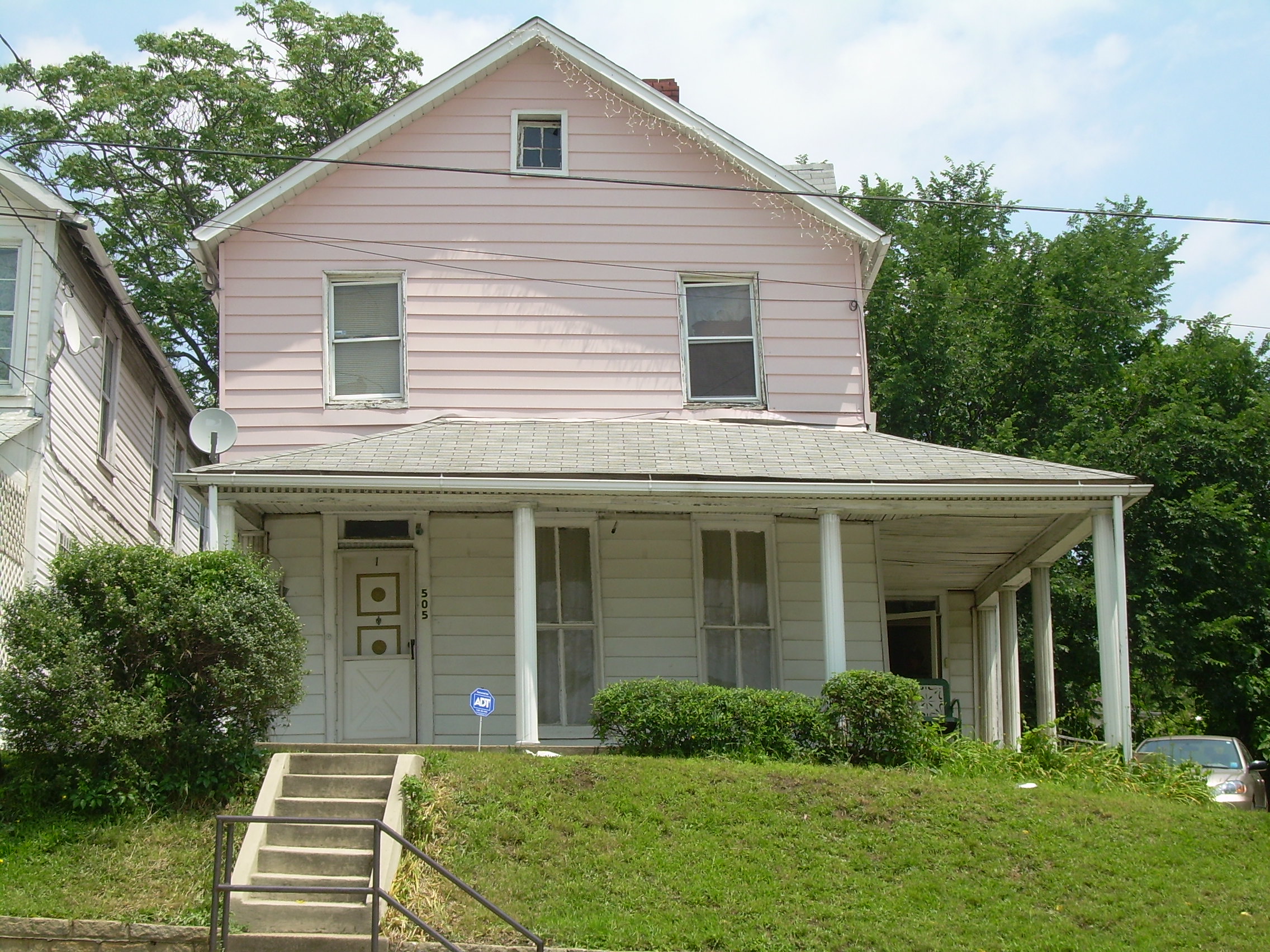 |
| Wm S & Portia M. Pittman House, Fairmount Heights, Maryland in better days PG-MNCPP Historic Survey Database |
We have
lost another historic structure to neglect and perhaps a vandal's fire (Gazette.,net story). On December 15, 2012 a fire destroyed a house designed by African-American professional luminary, William
Sydney Pittman. And you say Pittman, Pittman who, because we do not teach the
history that surrounds us nor do we make it easy to learn the stories of the
extraordinary men and women who once walked and lived right here in Prince
George's County. In fact there are a few who would have you believe that the
county is an empty, blank slate just waiting to be paved over.
 |
| William Sydney Pittman 1875-1958 image form the Dallas Texas Observer "Demolition by Neglect" |
 |
| Mrs. Portia Marshall Washington Pittman image URL |
William
Sydney Pittman, whose "trailblazing professional deeds" are a part of
little-known black history moments and almost lost to history, was born in
Alabama on April 21, 1875.[1] He
attended Tuskegee Institute. There he studied woodworking and
architectural-mechanical drawing completing his studies in 1897. He then enrolled
in the Drexel Institute in Philadelphia and received a degree in Architectural
and Mechanical drawing in 1900.[2]
From late 1900 to 1905, William S. Pittman was employed at Tuskegee Institute
as department head of architectural drawing.
In 1905
Mr. Pittman came to Maryland and Fairmount Heights in Prince George's County. He
went to work for John Anderson Lankford at the offices at 1448 Q Street, NW, in
Washington. D.C., and within a short time opened his own practice. He designed
the house, now lost to us by vandals, in to which his bride, the daughter of
Booker T. Washington, Portia Marshall Washington moved after their marriage in
1907. There they entertained national dignitaries such as the editor of
Boston's Alexander Magazine. A newspaper account in April of 1908 described the
guest list which included an employee of the War Department, a judge and the
Recorder of Deeds as well as other guests.[3] The
Pittman House was located at 505 Eastern Avenue, Fairmount Heights, Maryland
(PG#72-9-18).
Mr.
Pittman was very much involved in the growth of Fairmont Heights taking an
active interest in the establishment of the town. He founded the Fairmont
Heights Mutual Improvement Company, designed the town hall and the first
elementary school. In his professional life he became the first African-American
to win a federal commission for the Negro building at the national
Tercentennial Exposition at Jamestown, Virginia.[4] He
also designed Garfield Elementary School (1909) and the 12th Street YMCA building
(1912) the cornerstone of which was placed by President Theodore Roosevelt in
1908.[5]
 |
| 12th Street YMCA, Washington DC image from Blackfives.com |
The town
of Fairmount Heights, finally incorporated in 1935, is one of the oldest
African American municipalities in Maryland contending for the prize of
"first" with North Brentwood also in Prince George's County [Meet
the 27 Historic Municipalities of Prince George's County, Maryland - Ready for
Adaptive Re-use]. The Pittmans would leave Fairmount Heights in 1913 and
the house began its long slow descent into obscurity recognized by the
community and a few preservationists but forgotten by the county generally. How
easy it is to lose our history and our connection with those who cleared the
way for us today.
For a
detailed account of Mr. Pittman's life and achievements, see:
Susan G. Pearl, "WILLIAM
SIDNEY PITTMAN (1875-1958)," in Drexel University Archives Digital
Collections, Item #84, http://archives.library.drexel.edu/displays/exhibits/show/pittman/1897-1898/item/84
(accessed January 14, 2013). 4 (accessed
January 14, 2013).
http://archives.library.drexel.edu/displays/archive/files/pearlsusang-williamsidneypittman1875-1958_d68def9e1d.pdf
 |
| Kentland volunteer fire Department Facebook page photo |
[1]
Norma Adams-Wade, Pioneer black architect’s life to unfold at symposium. Dallas
Morning News. March 15 2010. http://www.dallasnews.com/news/columnists/norma-adams-wade/20110315-pioneer-black-architects-life-to-unfold-at-symposium.ece
[2]
Everett
L. Fly, "PITTMAN, WILLIAM SIDNEY," Handbook of
Texas Online(http://www.tshaonline.org/handbook/online/articles/fpi32),
accessed January 14, 2013. Published by the Texas State Historical Association.
[3]
Washington Bee, published as The Washington Bee; Date: 04-18-1908; Volume: 27;
Issue: 47; Page: [5]; Location: Washington (DC), District of Columbia
[4]
Historic Site Summary Sheet. http://msa.maryland.gov/megafile/msa/stagsere/se1/se5/018000/018800/018833/pdf/msa_se5_18833.pdf
[5] Dreck
Spurlock Wilson. African-American Architects: A Biographical Dictionary,
1865-1945. Taylor & Francis. 2004. 550 pp.
Friday, January 11, 2013
MC/PG 108-13 is a very bad bill
MC/PG 108-13 is a very bad bill coming soon to a committee
near you. WSSC the people and organization who bring some of you water and take
sewage away is seeking to an exemption from legislation that protects all of us
from the negative impacts and harmful effects of exactly that sewage WSSC is
charged with disposing of. This is so wrong on so many levels as to boggle the
imagination. WSSC wants to externalize its costs onto the environment and the
ecosystem because being responsible for and cleaning up the resulting long term
mess would not be their problem. In essence WSSC is trimming short term costs
to better serve you, by charging long term pollution clean-up costs to future generations
who can't quite vote yet.
The regulations that WSSC thinks it should not
have to follow are designed to achieve consistency in the way all sources of
nutrients (such as solid organic wastes, manures, sludge) are managed and help
Maryland meet nitrogen and phosphorus reduction goals spelled out in its
Watershed Implementation Plan to protect and restore the Chesapeake Bay. Nutrients,
organic material, sediment and other pollutants are introduced to the
Chesapeake Bay from a variety of sources. These are generally separated into
two broad classes, point and nonpoint sources. Point sources, as the name
implies, are inputs with a specific point of entry into the system. Municipal
sewage and industrial discharges are examples of the major point sources of
pollutants to the Bay. Nonpoint sources do not have a readily identifiable
point of entry to the system or they may have many, diffuse points of entry to
the system. Rain water runoff and ground water discharges are examples of the
major nonpoint sources of pollutants to the Bay. [Maryland
Department of Natural Resources Bay Monitoring]
According
to the Maryland Department of Agriculture, "Nutrient Management
regulations are necessary to achieve consistency in the way all sources of
nutrients are managed and to ensure that Maryland meets its nutrient reduction
goals. These goals are an essential part of the comprehensive Watershed
Implementation Plan (WIP), a multi-state planning process to achieve nutrient
and sediment reductions to protect and restore the health of the Chesapeake Bay
and its tributaries by 2025."
And why
do care? Because having a unified planning approach and not a series of individual
disconnected data plans is the way to go as far as clean water is concerned. The
Maryland Department of Agriculture implemented an approach to the revised
regulations that will allow thousands of farmers and hundreds of wastewater
treatment operations time to secure the financial and technical resources
necessary to comply with the most immediate nutrient management provisions. To
exempt one of these sources, such as the WSSC, compromises the objective of the
regulations. The winter ban provision of the regulations will help reduce the
risk of nutrient runoff into the bay during winter when there is not a growing
crop to utilize the nutrients.
It falls
on us, the citizens of Maryland, to once again reign in a quasi-governmental
organization which thinks it is too big to actually follow the rules that the
little people have to abide by - the same people who pay today and tomorrow.
Sunday, December 09, 2012
Friday, December 07, 2012
Peace Cross Monument, Bladensburg & Upper Marlboro Memorial to Veterans of World War I from Prince George's County
Copied from
November 1973
Vol – 1, No – 9
CONCERNING VETERAN’S DAY
Early
in the years of the Great Depression, as a first grader, the real meaning of November
11th was impressed upon this writer. At 11 AM the school bell was rung and the
children of all grades stood beside their desks for a minute of silence in commemoration
of the Armistice which brought the Great War of 1914-1918 to an end.
Since
1918 the United States has been engaged in three other major conflicts and Armistice
Day has been changed to Veterans’ Day in honor of all those who have served.
This change is understandable. It is difficult to accept, however, the latest
tampering with Veterans’ Day. We refer to placing it on a Monday in October in
order to provide a three-day holiday which is also becoming a gigantic sale
day, in competition with the birthday of George Washington. Hopefully, without
sounding too old-fashioned or sentimental, it is our feeling that it would be
better to designate the October date as simply a “Business Holiday” and not designate
the memory of those who served by calling it Veterans’ Day. Under the
circumstances where the meaning of the holiday is almost completely lost,
better no Veterans’ Day at all.
Harking
back to the Great War of 1914-1918, it is interesting to note that there are
two memorials in Prince George’s County which were erected to the memory of all
of the citizens of the County who lost their lives in that conflict. In 1919,
just one year after the Armistice, the County erected a monument (fountain) on
the Court House lawn, bordering Main Street in Upper Marlboro. In recent years
the location of the monument was changed to the far left side of the lawn, set
back from the street.
The
Upper Marlboro bears the following inscription:
THE
RIGHT WILL PREVAIL
This monument perpetuates the memory of
the sons and daughters of Prince George’s County who true to the tradition of
their County To the spirit of that service, tribute is here paid by a grateful
people. J. M. Miller, Sc.(ulptor) W. G. Bucher, Arch.(itect) J. Arthur Emerick
Co., Founders, Baltimore A.D. 1919
On
the opposite side of the monument is the following inscription:
ERECTED
1919 These men from Prince George’s County made the supreme sacrifice defending
the liberty of mankind.
(The
list of names follows.)
 |
| Bladensburg, Prince George's County, Maryland, Peace Cross Monument World War I Memorial picture by John Peter Thompson, Chair Pri. Geo.'s Historic Preservation Commission 2012 |
The
most well known of the two memorials in Prince George’s, primarily because of
its imposing size and its location, is the Peace Cross Monument in Bladensburg.
Situated in the center of the intersection of two major arteries, Bladensburg
Road (Rt. 1) and Defense Highway (Rt. 240, old Rt. 40), it has achieved landmark
status over the years.
(Until recent years it was the point of reference for
the famous Bladensburg floods.)
The
fund drive for the famous Peace Cross was begun early in 1919 by Mr. John Riggles
of Lanham and Mrs. J.H. Norman of Hyattsville. Individual contributions ranged
from 50¢ to $100, and the three local newspapers (The Washington Star, The
Times and the Washington Post) as well as three department stores (Woodward
& Lothrop, S. Kann & Sons and Lansburg Bros.) each contributed $100.
Numerous
benefits were held and a total of $1,523.16 was collected, but the drive began
to wind down by late 1920. At this point the Snyder-Farmer Post of the American
Legion agreed to assume responsibility for the completion of the Peace Cross. Snyder-Farmer
Post No. 3 of the American Legion was officially recognized on July 8, 1919,
the third in the State of Maryland.
Most
of the Legionnaires had been members of Hyattsville’s old Company F, Maryland National
Guard, which became part of the 115th Infantry when they were mustered into
federal service andsent to France. (A charter member from another part of the
County was the late Rep. Lansdale G. Sasscer of Upper Marlboro.) The Post was
named for Maurice B. Snyder and George W. Farmer, both of Hyattsville, who lost
their lives on October 8, 1918 in the Meuse-Argonne Offensive. The Peace cross
was dedicated on July 12, 1925. The total cost, including the wall around the
mound to protect it from the floods, was approximately $25,000. Of this amount,
about $23,000 was raised and donated by Post No. 3.
At
the base of the huge cross these four words appear on each side:
VALOR,
ENDURANCE, COURAGE, DEVOTION
On the face of the cross at the junction
of the two arms is a gold star bearing the letters “U.S.” in red in the center.
Encircling the Star is a blue wreath. The inscription on the bronze tablet is
as follows:
1917
This Memorial Cross 1918 dedicated to the heroes of Prince George’s County,
Maryland, who lost their lives in the Great War for the Liberty of the World.
Albert N. Baden H.
Irvin Dennison Ernest
O. Gardner
Henry H. Boswell Wilmer A.
Disney Milton E.
Hartmen
Herman E. Burgess Joseph B. Edelen Thomas
E. Hawkins
Clarence Butler George
W. Farmer Frank Holmes
Vincent G. Cooley Thomas N.
Fenwick Henry Lewis Hulbert
James Cooper Edward
H. Fletcher Charles E.
Huntemann
Matthew Curtin Joseph
Henry Ford William Lee
E. Pendleton Magruder William Redmond Edward Shoults
E. Monshuer Maxwell Frank Richmond Albert Smith
Clarence McCausland Henry P. Robinson Maurice B. Snyder
Lee Earle Merson Theodore Rochester John A. Sprigg
Howard H. Morrow Frank C.
Rorabaugh Pierre C. Stevens
Isaac Parker Robert C. Rusk Kenneth P. Strawn
James F. Quisenberry John H. Seaburn William A. Tayman
Elmer Thomas Elzie Ellis Turner Walter E. Wilson
Benjamin E. Thompson Herbert J. White Herman
Winter
Subscribe to:
Posts (Atom)