Saturday, May 14, 2011
Archeological Site of Salubria: Home of Dr. John H. Bayne of Prince George's County, Maryland
80-002 Site of Salubria (18PR692)
Oxon Hill Road, Oxon Hill
House built circa 1830—The house at Salubria was a 2½-story frame dwelling with kitchen wing and doctor's office; on the grounds stood several early nineteenth-century outbuildings. Salubria was built for Dr. John H. Bayne, prominent physician, agriculturist, and first superintendent of the county's public schools; it was the home of five generations of the Bayne family. The house was severely damaged by a series of fires in the 1980s and 1990s. After archeological investigations were undertaken on the rounds, the house and all but one outbuilding were demolished in 2003.
http://www.pgplanning.org/Assets/Planning/Programs+and+Projects/Community+Plans/Illustrated+Inventory+of+Historic+Sites/Illustrated+Inventory+of+Historic+Sites+-+Archeological+Sites.pdf


Friday, May 13, 2011
Report by Colonel John H Bayne of Salubria, Prince George's County, MD Acting Assistant Surgeon, US Army
Report by Colonel John H Bayne of Salubria, Prince George's County, MD
Acting Assistant Surgeon, US Army
"Report on barracks and hospitals, with descriptions of military posts"
Washington, December 5, 1870
http://www.archive.org/stream/reportonbarracks00unitrich/reportonbarracks00unitrich_djvu.txt
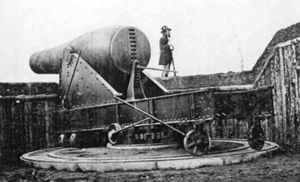 |
| Fort Foote (1863-1878) - A U.S. Civil War era Coastal Fort named for Commodore Andrew H. Foote on 1 Oct 1863. The garrison was removed 10 Nov 1878 and the fort was abandoned. http://fortwiki.com/Fort_Foote |
68 DESCRIPTIONS OF MILITARY POSTS.
FORT FOOTE, MARYLAND.
KEPORT OF ACTING ASSISTANT SURGEON, JOHN. H. BAYNE, UNITED STATES ARMY.
Fort Foote is situated immediately upon the Potomac Hivrr, on the Maryland side, about eight miles below Washington City, on an elevation of land known us llozer's Bluff, at an altitude of about 100 feet above tide-water. In the rear of the fort is an extensive gorge, varying in depth from 10 to 100 feet, running the full extent of the reservation, and continuing thence to the Potomac River. A marsh about 400 yards wide, and covered with a thick growth of coarse grass and small trees, extends along the margin of the Potomac, in a northerly direction, to the distance of a mile. About a mile and a quarter below the post, in a southeasterly direction, is located a marshy tract of land of at least 200 acres, called "Broad Creek;" one-half of its area is clothed with a luxuriant growth of tall coarse grasses, interspersed with scrubby trees and bushes; the other half is composed of mud banks, the accumulation of years, brought down by floods from the hills and valleys above.
This post was established in 1862, as an adjunct to Fort Washington, four miles distant, and
was first occupied by the Ninth New York volunteers, under command of Colonel Stewart.
The fortification is constructed of earth and green timber. The quarters of the garrison, the
hospital, and other buildings in process of erection, are eligibly located upon the height back of the fort. The barrack is a new two-story wooden building, 160 feet in length, affording a sufficient capacity for two companies. The walls of the building are lined with brick, and a veranda extends its whole length in front, with a roof formed by a continuation of the roof of the building. The barrack is warmed by stoves, artificially lighted by candles, and ventilated through the roof. The dormitories, 78 by 23 feet, and 9 feet high to the caves, would each accommodate 33 men were each man allowed an air space of 600 cubic feet, but double that number have been placed in them. They are two in number, and occupy the second floor of the building. Iron bedsteads, similar to those used in the hospital department, are furnished, and over each is a shelf for the knapsack of the soldier.
The lower floor of the building contains a wash-room, mess room, kitehen, library, office, &c. The kitchen is large, and has two store-rooms adjoining. The mess-room occupies about one-third of the area of the first floor, and contains two rows of tables.
Married soldiers' quarters are five new rooms, 16 by 12 feet, one room to each family, with a porch in front, and kitchen attached to the rear of the building. Officers' quarters are two frame houses, lined with brick ; each house is a double set of quarters, each set containing four rooms.
A bomb-proof within the fort is occupied as a guard-house and prison-room ; being an earth-work, and the timbers somewhat decayed, it is illy adapted for the purposes for which it is used. It is sufficiently heated by a wood-stove, but the ceilings, which are of decayed logs, admit water in rainy weather. The floor is damp, making it very uncomfortable for the occupants. The guard, house and prison-room are doubtless causes of much sickness at this post, as nearly every private soldier in the garrison has to occupy one of these rooms underground every alternate night on guard duty.
The post bake-house is a commodious wooden building, with brick oven attached sufficiently large to turn out 350 rations of bread in a batch. The water supply is obtained from a well, a spring, and several small cisterns. There are no underdrains or sewers at the post. A system of leveling, grading, paving, and draining has been so thoroughly and unremittingly pursued that the grounds have been rendered comparatively firm and dry.
Endemic dysentery and diarrhosa have prevailed at Fort Foote with great severity during the last six months, (ending December 31, 1869,) which, superadded to the autumnal disease incident to this locality, rendered the percentage of sick very large in proportion to the command, and as tlie first two named diseases have been exclusively continue! to its limits, it is difficult to account
for their origin and prolongation.
Situated in a malarial district, interinittents, remittents, malarial dysentery and diai-rlm-a
prevail at this post during the autumnal months ; but for the period above mentioned the proportion of sickness has been far greater than that of previous seasons, while Fort Washington, a few miles below, on the Potomac River, with malarial surroundings very similar, has enjoyed the most perfect immunity from disease. The morbific, agent would thus appear to have a local origin, even within the limits of the post; but after the most careful investigation it is impossible to arrive at any satisfactory solution of the, difficulty. The cases have nearly all been very protracted, varying in duration from one to four months, and presenting nearly the same series of morbid phenomena.
The post and hospital gardens contain about three acres. Potatoes, onions, and cabbages are raised in abundance for the supply of the small company at present forming the garrison.
Saturday, May 07, 2011
John H. Bayne of Salubria Prince George's County Slave-owner and Abolitionist, Horticulturist and Physician, Politician and Citizen - Scientist
In some sense the story of John Bayne of Salubria - physician and horticulturist, slaveholder and abolitionist, Senator and citizen - is the story of the unwilling partnership that built Prince George's County, Maryland. Farmer and politician, natural philosopher and citizen scientist, a slaveholder whose support of that evil and peculiar institution came to affect him personally and tragically as it affected the slave which he owned. His story is that of a tortured route to support the abolition of slavery which had benefited him and a privileged minority in the State of Maryland.
The industry of Prince George's County in the early 19th century was overwhelmingly agricultural providing great wealth that came "from the land, tobacco, and from slaves." Indeed, "more slaves worked here than in any other county in the state, and the gentry, the old families who led our social and public life, lived in a style befitting the legends that linger about them." Moreover, the plantation economy of Prince George's County was at its height. By 1860 the county was producing more than thirteen million pounds of tobacco annually. In addition to tobacco, the area produced more than 300,000 bushels of wheat and about 700,000 bushels of corn, and local farmers owned 5,000 horses, 4,000 milk cows, 9,000 sheep, and 25,000 swine. Much of the farm work was done by slaves; among the 2,000 white families in the county, there were 850 slaveholders holding 12,500 slaves.
An 1848 report of an agricultural society's visit to Salubria describes Dr. John H. Bayne, as "the ne plus ultra of horticulturists. The committee spoke of the "wondrous delight upon his variety of fruits. But when they came to taste his delicious Elsinburg grapes, Gloria Mundi, Bell flower, French pippin, Newton Pippin, Holland do., Fall do., Roxbury Russett, English do., Pennock's winter Golden pippin, Redstreak, Siberian crab, Baldwin Winesap and winter Catlin apples, peaches, lemons, &etc, they unanimously agreed, that to Doctor Bayne must be awarded the premium for the best variety of fruit. The committee award to this gentleman another premium of five dollars for his pears and flowers, the only ones exhibited." Pauline Collin writes that "Dr. Bayne was not only a prominent doctor, but an active participant in horticulture and politics. He farmed his own land and his father's lands and is credited with taking the tomato out of the garden curiosity class and making it a field crop." He was also a close associate of Charles B. Calvert of Riverdale, and assisted him in the planning of the College of Agriculture at the University of Maryland and a friend of Thomas G. Clemson (of Clemson University fame)."
Dr. John Bayne was born on February 15, 1804 in Maryland. An influential slaveholder of Prince George's County during the nineteenth century, he was a physician and served as a state senator during the Civil War (1861 – 1865). One of most consistent roles Bayne played was to advocate for all Maryland slaveholders who witnessed their property literally walk away during the chaos of the conflict. As other slave holders also lived in his neighborhood—in particular, Thomas E. Berry at Oxon Hill Plantation—cross-plantation communities among the slaves developed. These connections were important in flight attempts, for blacks from neighboring plantations often ran together. Indeed, when Bayne's slave Sam Tyler fled Salubria in December 1840, his owner suspected that he had run off with one of Berry's Oxon Hill slaves, a man named Jacob Shaw.
President Lincoln gave Dr. Bayne a commission as a high-ranking surgeon in the Union Army during the Civil War. Bayne frequently consulted the White House and Maryland's Governor to deal with the problem. In the end, however, neither Senator Bayne, nor his fellow slaveholders could stop self-emancipation efforts of enslaved Marylanders. By 1864, John Bayne foresaw the inevitable end of slavery and wrote a declension speaking out against slavery in favor of a unified nation. Partially in recognition of this, Maryland lawmakers finally abolished slavery in the state with the Constitution of 1864.
John Bayne was the owner of the Salubria Plantation in Southern Prince George's County, Maryland. Bayne owned a number of slaves and witnessed resistance on his plantation through destruction of property, harm to his family, and slaves running away. On November 6, 1834 a fourteen-year-old slave named Judith, poisoned Bayne's two sons, George (7 years old) and John (5 years old), who died days later. Judith was interrogated and confessed to the crime. She further admitted attempting to burn the dwelling house at Salubria and killing Bayne's infant daughter Mary Catherine two years prior. According to newspapers of the time, no one understood Judith's motives at the time because "she came from a nice family." Although Judith was only 14 at the time, she was tried and hanged. The children of Dr. Bayne and his wife Mary are buried in the Apple Grove Cemetery in Fort Washington. John Bayne died on August 18, 1870 and is buried at the St. Barnabas Episcopal Church Cemetery in Temple Hills, MD.
1 Chapter 5 The Washington Years Alan Grubb http://www.clemson.edu/cedp/cudp/pubs/tclemson/05grubb.pdf
2 The American Farmer, and Spirit of the Agricultural Journals of the Day Samuel Sands 1848
3 Along the Shores of the Potomac in Prince George's County A local History from TantaCove Garden Club 1992
4 PG County Pictorial History and Stones and Bones
5 © Copyright February 06, 2007 Maryland State Archives http://www.msa.md.gov/megafile/msa/speccol/sc5400/sc5496/010500/010538/html/010538bio.html
Monday, March 28, 2011
What is the purpose of our county government if not to care for the least among us?
We are letting our county and its communities decline even as we find ways to support the concentration of wealth in the hands of a few. We have money to spend fighting wars abroad but what exactly are we defending if we can not support the least among us? If we can not fund research, or education, or infrastructure, or social programs, what are we fighting for exactly? Why are we able to constantly find ways to support the rich but we can only cut support for the poor? Why can we find tax dollars to rescue the wealthy from their blunders but not a penny to help those oppressed by concentrated wealth? Where once we had a government of the people now we have a government partnership with wealth.
A letter from Douglas E. Edwards, Vice President of Coalition & Founder/President/CEO of
Mission of Love Charities, Inc.
To All Nonprofits in Prince George's County and those from other jurisdictions who are sympathetic to our cause:
Please attend this most important meeting ... It's too late to get on board after the fact, you need to stop what ever you are doing and join with us to send a clear message to the County Executive, that we will not allow his administration to kill the poor and blame the nonprofits for their death.
This is not to say that all nonprofits would fail, there are some that would simply cut staff, cut trips they generally take to conferences, cut printing and publications, e.t., but those of us who provide direct services like Mission of Love, and I'm certain that there are others, to cut us by 1/3 or $1.00 and we would be out of business. And, who knows, that just might be the plan, to drive some of us our of business that might serve as a thorn in their side, but reminding people that we do have poor people living in our affluent African American County.
Mr. Hamler talks about helping to secure federal funds ... even if that were true, that fact is that Mr. Hamler knows that the federal government announced its cutback long before the county announced theirs. So to make you believe that there are federal dollars available is disingenuous at best. Not only are we not going to be able to get grants from the feds, the feds have already moved to cut CDBG funding by billions with a "B", and our county officials knows that as well. I point this out specifically because they are not being honest with us in terms of where we can go for supplemental funding ... there are none there.
If these cuts goes through, or if we are retaliated against for fighting this proposed budget reduction, think of the number of poor people that will suffer. My organization alone provides services to between 10, 000 and 12,000 poor people annually. Again, think about the number of poor people that would suffer, some even turning to crime (and we know from recent statistics that it cost much more to imprison than to assist or to educate) to feed, clothe and keep a roof over the heads of their families.
To cut our budget by 1/3 or $1.00 would be a death sentence for Mission of Love Charities, a 20 year old African American owned and operated nonprofit.
Wednesday, February 23, 2011
Prince George’s County Maryland must not Close the William S. Schimdt Outdoor Education Center
Prince George's County, Maryland, in a continuation of short sightedness brought on by an inability to find creative funding solutions for education, prepares to ax its William S. Schimdt Outdoor Education Center with its science programs that focus on environmental education. This is not surprise in a county that feels it can pave its way to success even while being amazingly myopic about the long term implications of these decisions. The economic excuse does not go far, even if some in the county continue to think of open space as an invitation to plunder. An uneducated and unaware student body will come of age woefully unequipped do deal with problems of clean air and clean water, just to mention a few examples, because of decisions some in Prince George's County would take to fix today's economic budget challenges. We can not say that the students of an urban county are not worthy of exposure to environmental science and the impact of ecological system services and resources to them in their future.
Defunding the William S. Schmidt Outdoor Education Center ranks right up there with eliminating the arts as one more financial decision based on an expediency of the moment - no Art, no Science, no Literature…what subject, exactly, do our elected school board members think is important to a student's education? If we cut enough, we will not need their services for the school system will simply be an institution marking time at tax payers expense delivering nothing of value to anyone.
For forty years the William S.Schimdt Outdoor Education Center has provided incalculable value to the students of Prince George's County and therefore to the county itself. The William S. Schimdt Outdoor Education Center has provided science education and social studies in a direct, hands-on overnight program for 5th graders. In addition the Schimdt Center is a resource for teacher and a partner for numerous non profits that work together to build and enhance a county of excellence. If our school board cannot rise to the occasion and find a creative solution, the William S.Schimdt Outdoor Education Center will be closed reinforcing the message that the environment is unimportant precisely at the same time that the rest of the world is recognizing the dramatic, specific and crucial impact of ecosystem services and resources has and will have on each and every one of us.
And one last little thing: closing the Schimdt Center violates COMAR 13A.04.17.01E taking the county backwards to the past instead of forward to its rightful place of excellence in the future. And what is COMAR you ask? COMAR is the Code of Maryland Regulations which reads in part: "All students shall have the opportunity to participate in the comprehensive environmental education program required by the regulation to meet their graduation requirements in environmental literacy."
Call your county and state politicians and of course call the school board members and loudly tell them NO
Thursday, December 30, 2010
Maryland General Assembly SPEAKER BUSCH ANNOUNCES COMMITTEE ASSIGNMENTS
MARYLAND HOUSE OF DELEGATES
Michael E. Busch, Speaker
For Immediate Release:
December 29, 2010
SPEAKER BUSCH ANNOUNCES COMMITTEE ASSIGNMENTS
ANNAPOLIS, MD – House Speaker Michael E. Busch today announced committee assignments for six standing committees in the House of Delegates, as well as appointments to new leadership positions. In the upcoming session, Appropriations will have 25 members, Environmental Matters will have 24, Health & Government Operations, Economic Matters and Ways & Means each will have 23, and Judiciary will have 22 members.
The committees are balanced to reflect the demographic, geographic and party makeup of the legislature.
The following Delegates and Delegates-elect were appointed today. Delegates not included on this list will maintain their current committee assignments.
LEADERSHIP APPOINTMENTS
Delegate Kathleen M. Dumais (District 15) Vice Chairman, Judiciary Committee
Delegate Samuel I. Rosenberg (District 41) Vice Chairman, Ways and Means Committee
Delegate Brian J. Feldman (District 15), House Parliamentarian
Delegate Marvin E. Holmes, Jr. (District 23B) Chair, Democratic Caucus
Delegate Justin D. Ross (District 22), Vice Chair, Democratic Caucus and Chief Deputy Majority Whip
Delegate Anne R. Kaiser (District 14), Chief Deputy Majority Whip
APPROPRIATIONS COMMITTEE
Delegate-elect Michael Hough (District 3B)
Delegate-elect Kathy Szeliga (District 7)
Delegate-elect Mary Washington (District 43)
Delegate-elect Craig Zucker (District 14)
ECONOMIC MATTERS COMMITTEE
Delegate Benjamin Barnes (District 21)
Delegate-elect Steve Hershey (District 36)
Delegate Tom Hucker (District 20)
Delegate Benjamin F. Kramer (District 19)
Delegate Steven R. Schuh (District 31)
Delegate Kelly Schulz (District 4A)
Delegate Jay Walker (District 26)
ENVIRONMENTAL MATTERS COMMITTEE
Delegate James W. Gilchrist (Delegate 17)
Delegate-elect Patrick Hogan (Delegate 3A)
Delegate-elect Jay Jacobs (District 36)
Delegate-elect Herb McMillan (District 30)
Delegate-elect Charles Otto (District 38A)
Delegate-elect Shane Robinson (District 39)
Delegate-elect Cathy Vitale (District 33)
Delegate-elect C.T. Wilson (District 28)
HEALTH & GOVERNMENT OPERATIONS COMMITTEE
Delegate-elect Bonnie Cullison (District 19)
Delegate William J. Frank (District 42)
Delegate-elect Ariana Kelly (District 16)
Delegate Peter F. Murphy (Districgt 28)
Delegate-elect Justin Ready (5A)
JUDICIARY COMMITTEE
Delegate-elect Tiffany Alston (District 24)
Delegate-elect Sam Arora (District 19)
Delegate-elect Luke Clippinger (District 46)
Delegate-elect John Cluster (District 8)
Delegate-elect Michael McDermott (District 38B)
Delegate-elect Keiffer Mitchell (District 44)
Delegate-elect Neil Parrott (District 2B)
Delegate-elect Geraldine Valentino-Smith (District 23A)
WAYS & MEANS COMMITTEE
Delegate-elect Kathy Afzali (District 4A)
Delegate Talmadge Branch (District 45)
Delegate-elect Mark Fisher (District 27B)
Delegate Glen Glass (District 34A)
Delegate-elect Eric Luedtke (District 14)
Delegate-elect Aruna Miller (District 15)
Delegate Samuel I. Rosenberg (District 41)
Delegate Andrew A. Serafini (District 2A)
Delegate-elect Michael Summers (District 47)
# # #
Alexandra Hughes
Communications Director/Policy Advisor
Speaker's Legislative Office
410/841-3917 (o)
443/807-3881 (c)
Monday, December 06, 2010
Prince George’s County Executive’s New Beginnings
 |
| Upper Marlboro,Prince George's County Maryland - inauguration December 6th, 2010 |
 |
| Rushern L. Baker III Prince George's County Executive |
Mr. Baker called for a planned partnership with education to bring the excellence to the students of the county, and reaffirmed his intention to bring jobs as well as transparency to the development process in the county. He thanked the first responders for their sacrifices and paid compliment to the county work force promising to visit all the departments – a commitment that brought a loud round of applause. Mr. Baler also took time to mention the environmental focus of his new administration and his promise to extend a "green" vision across the county. Will the new Executive reach out to the broad spectrum of environmental and ecosystem constituencies ranging from the economic concerns of environmental justice to river keepers and clean water, from historic preservation to agricultural preserves? (In the interest of full disclosure, I would like to work in the new administration in some capacity to help Mr. Baker achieve these goals)
 |
| Prince George's County Md Council & Executive |
The singing of the Star Spangled Banner was wonderfully done and reminded me of the history of Upper Marlboro and the writing of the anthem in part due to the arrest of town resident Dr. William Beanes. The brilliantly sung music and the stirring words spoke to the trials and tribulations once faced and overcome. The evident desire to begin anew and to work for the betterment of the County's residents was elucidated at length by Councilperson Harrison in here winter warming remarks that reminded us of the history we all share. Mr. Johnson, the out-going County Executive, was also in attendance supporting his wife Leslie Johnson (D) who was sworn in to represent my district, District 6.
So for the moment parochial interests were set aside and promise of partnerships for the citizens of the county rippled through the assembled crowd as hope was renewed for a fresh start and a new beginning. Coming up, who will be the new Chair of the County Council, and how will serve in the new Administration. Will there be a general collegiality of purpose between the County's new Executive and its new Council?
 |
| Prince George's County Md Inauguration Upper Marlboro 2010 |
1
The Site of the Residence of Dr. William Beanes http://wikimapia.org/7977423/Tomb-of-Dr-William-Beanes On the site of the Marlborough High School stood the residence of Dr. William Beanes. Here General Ross made his headquarters August 22, 23, 1814, on his march to Bladensburg and Washington. Here Dr. Beanes was made a prisonor for instigating the arrest of marauders from the British Army. It was to secure his release that Francis Scott Key visited the British fleet and being detained during the bombardment of Fort McHenry was inspired by its valiant defense to write the American National Anthem. This tomb was restored by the public school children of Prince George's County assisted by the National Star-Spangled Banner Centennial Commission under the auspices of the Star-Spangled Banner Society of Prince George's County
The Site of the Residence of Dr. William Beanes http://wikimapia.org/7977423/Tomb-of-Dr-William-Beanes On the site of the Marlborough High School stood the residence of Dr. William Beanes. Here General Ross made his headquarters August 22, 23, 1814, on his march to Bladensburg and Washington. Here Dr. Beanes was made a prisonor for instigating the arrest of marauders from the British Army. It was to secure his release that Francis Scott Key visited the British fleet and being detained during the bombardment of Fort McHenry was inspired by its valiant defense to write the American National Anthem. This tomb was restored by the public school children of Prince George's County assisted by the National Star-Spangled Banner Centennial Commission under the auspices of the Star-Spangled Banner Society of Prince George's County
Monday, November 22, 2010
Who should represent District 6 in Prince George’s County?
As I noted in my last blog, I would have no chance because I have no mooned interests behind me. Arthir Turner who did run on his record of 20 years of community collaboration, service and work, also has no monied interests behind him. Arthur Turner's record speaks for itself, but a record of service is not enough it would seem. And woe is to the candidate who actually has specific ideas that can be debated and discussed..
The current favorite | ARTHUR TURNER | ||
Davis | Title I Program Family and Parent Involvement Coordinator for Prince George's County Public Schools | 1. Coalition of Central Prince George's County Community Org. – President | |
Davis | The ARC of Prince George's | 2. Towns of Kettering Home Owners Association – President | |
Davis | Prince George's County NAACP | 3. United Communities Against Poverty (UCAP) – Chair of Board | |
Davis | Chaired, Freddie Mac Early Childhood Grant Fund for the Prince George's Community Foundation | 4. Prince George's County Chamber of Commerce Economic Development Committee -Former Chair (3 Terms) | |
Davis | Elected to the Prince George's County Democratic Democratic Central Committee in the 25th District | 5. Prince George's County Chamber of Commerce Quality of Life Committee – Former Chair | |
Davis | Appointed to Park & Planning Commissions Airports Advisory Committee | 6. Elected Vice-Chair to the Prince George's County Democratic Central Committee (25th Legislative District) | |
Davis | Appointed to the 2000 Prince George's County Charter Review Commission | 7. Board of Directors Prince George's County Library Foundation – Member | |
Davis | Appointed by the Governor in 2007 to the Maryland Automobile Insurance Fund (MAIF) Board of Trustees, Derrick was elected Chairman of the Board in December | 8. Washington Metropolitan Area Transit Authority (WMATA – Blue Line Extension Advisory Group Committee) – Member | |
9. Largo-Lottsford Area Sector Plan—Planning Advisory Group – Member | |||
10. PEPCO Community Advisory Group (CAG) – Member | |||
11. Washington Metropolitan Area Transit Authority (WMATA – Transit Oriented Development Advisory Committee) – Member | |||
12. Prince George's County Citizens Police Academy – Graduate | |||
13. Andrews Air force Base Honorary Commander | |||
14. Leadership Prince George's-Graduate | |||
15. Volunteer of the Year." Awarded by the Maryland Community Action Partnership/Maryland Head Start Association | |||
16. "Bridge Builders Award." Presented by The Prince George's Community Foundation | |||
17. Appointed Prince George's County Liquor Inspector. | |||
18. Spent hundreds of hours meeting with developers, their attorneys, and the MNCPPC to negotiate for the options we want | |||
19. Leading voice for upscale retail and quality, white tablecloth restaurants, fighting long and hard for the shopping and dining experiences | |||
20. Worked for the opening of Arena Drive-Beltway Exit 16 24 hours a day | |||
22. Leading advocate for better customer service at our existing restaurants and retail stores | |||
23. Reached a landmark agreement with the developer of the new Capital Heights Shopping Center. The developer agreed to our demands that no fast-food restaurants | |||
24. For over a decade a leading voice calling for Prince George's County to diversify our economy by focusing on federal and state government agencies and attracting them here | |||
25. Convened a hearing of the Maryland Board of Public Works to discus moving the Department of Planning to Prince George's County | |||
26. Over 70 links to articles that chronicle thousands of hours that 27/ Arthur has invested as an unpaid volunteer | |||
27. Community involvement and activism was featured in the Prince George's Suite magazine | |||
28. Long-time advocate and supporter of the Kettering Largo Mitchellville Boys and Girls Club | |||
29. Arthur acted and led a community-based group that was successful in its fight to keep the Forestville State Police barracks open |
Saturday, November 20, 2010
Prince George’s County Maryland, District 6 and the Future
Just back from a technical mission to Cameroon, I am stunned, dismayed, embarrassed, outraged and concerned about my county, Prince George's and my district 6. Is it time now to elect citizens with no connection to outside money and powerful interests? Have we had enough as the butt of joke and snide comments about our ability to get things done? Can we find away to elect community leaders who are not out to enrich themselves or their powerful supporters, but who are ready to work for the benefit of the common good? The answer I am afraid is that we will have learned nothing, and we shall elect to the council yet another person beholden to money and power.
What we need in District 6 is someone who has the backbone to publically post his or her plan for the district and county, willing to amend it or update it through transparent processes, to listen to the citizen's concerns and address them in an open manner and be accountable for the public's funds in the budget. We need someone who will address environmental justice issues surrounding unrelenting development, bring the spotlight of public scrutiny upon the eyesore of Landover Mall, watch carefully the trajectory for FedEx field lest it join Landover Mall, keep and eye on and a figurative torch to the quality of stores in The Boulevard at the Capital Centre, work with the town of Upper Marlboro to create a first class, "capital" county seat, hover over the plans for Westphalia, deal with the traffic and pollution nightmare that the new waste transfer station will bring to 301, partner with the new county executive to support and enhance the school system including following his lead by visiting every school in the district each year, work with the community college to reach out to the community, ensure that the libraries stay open, police stations and fire station stay manned and equipped, ensure small and medium size businesses find incentives to locate with quality jobs with in the district, and to generally support the other council members in projects that increase the well being of all of Prince George's County.
I would bring specificity to the position, outspoken, clear ideas when necessary and an ability to find consensus when appropriate, but I would not win for I would not bring special interest's willingness to pave our way to prosperity, nor an obligation to support blindly one group's agenda over the greater good. I am a radical moderate looking for the pragmatic center. In this county a citizen like me with no strings attached is unable to be elected. Because of our unwillingness to take control of our own future, we shall find more of the same and wonder why.
Wednesday, November 03, 2010
Government by vaguenessss in Prince George’s County
Prince George's County has lost its mind. It just approved 240 million in capital bond financed spending. How many people can actually detail what the money will be spent on. More to the point, after building or repairing what ever we just voted for, where will the staffing and program money come from? Having just given our council and executive another raise without saying where the funding will come from, we now will build renovate and repair structures for which h we do not have any money to provide programs or employees. We keep building and developing without actually having any idea as to how we shall fund the resulting ongoing programs and maintenance projects. And we make it nearly impossible to actually know what we are approving by crafting ballot language with no specifics. It goes without saying that we shall find new fees and taxes continuing the endless cycle of uniformed debt obligation. It is almost as if the political class thinks the rest of us are too busy or simply not smart enough to understand what they are doing.
We Prince Georgians need to start today asking each other how our politicians plan to pay for the programs and personnel of any novel capital project that they cook up. We need to tell them to focus on what we have and fix it before adding more to the county's debt load. How will they pay for the programs and people that will be needed to provide support for whatever new project they have in mind? We cannot pave our way to prosperity, nor can we spend our way to success. Transparent accountability in government means clearly stating the project and the long term funding prospects for programs and the staff. If you, our politicians, are going to build something, how will you pay for the infrastructure support, staffing and programs after you pay for the development itself.
Subscribe to:
Posts (Atom)